
Beautiful Plants For Your Interior
Beautiful Plants For Your Interior

There are a multitude of recording microphones on the market! These many types of microphones make it difficult to choose when buying or recording in the studio. A sound engineer or musician must choose a microphone according to the use they make of it. Any microphone captures and records sound. However, the parameters of generation and recording of the source are very different: the voice, the type of musical instrument, the type of capture, the timbre, etc.
It is necessary to understand the technologies and characteristics offered by each microphone to benefit from the best possible recording quality.
The frequency band of a microphone, also called the frequency response, represents the range of sound frequencies that it is capable of capturing and reproducing. It is measured in Hertz (Hz), and is translated into a range of minimum and maximum values. The frequency band is essential because it will define the sound reproduction quality. A microphone must be adapted to the sound source it is recording. Each musical instrument has its own frequency range. A guitar does not produce the same frequencies as a violin or a double bass. It is therefore essential to select a microphone adapted to the original source of the sound.
The diaphragm is a thin element that vibrates when a microphone captures sound. These vibrations are at the origin of the conversion of sound waves into electrical energy. In fact, the diaphragm moves in response to changes in acoustic pressure. Depending on the microphone, it is connected to a coil of conductive metal wire oscillating between the poles of a magnet. Thus, the vibrations entrain it, which generates an electrical signal.
The diaphragm affects the quality of sound capture and plays a role in the interpretation of sound. It is the main component of a microphone. There are microphones with different diaphragm sizes.
Small diaphragm microphones are easy to position. They have a wide dynamic range, making them ideal for capturing all types of instruments. These are the small cylindrical microphones that are very often seen in the studio or on stage.
Large diaphragm microphones have a larger surface area to capture sound waves. They therefore react to a larger part of the frequency spectrum of the emitting sources. They are the standard for vocal recording because they detect more elements than other models.
There is an intermediate diaphragm placed on some microphones called medium diaphragm microphones. They are an alternative between the two previous ones. They always capture a part of the high frequencies of small diaphragm microphones while retaining some of the warm sound offered by large diaphragm microphones.
The directivity of microphones is an element to analyze before any purchase. The directivity defines how they capture sound from multiple directions. There are several directivities:
There are microphones with multiple directivities. This means that you can select the type of directivity using a switch.
Each directivity has its own sound capture characteristics. They depend on the position of the microphone relative to the position of the sound emitting source.
A polar diagram is the capture method that defines how microphones capture sound (see below the different polar diagrams). They refer to the sensitivity of the microphone according to the acoustic pressure and the position of the elements.
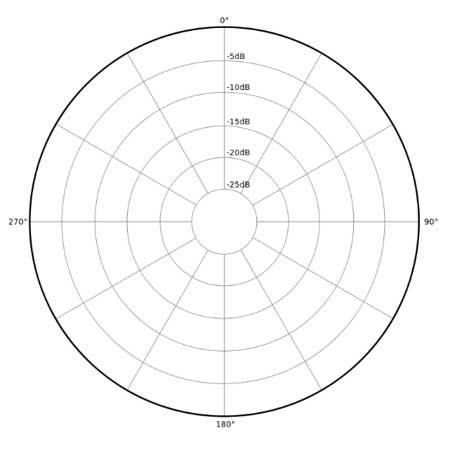
An omnidirectional microphone captures sound from all 360 degrees around the microphone. Any sound source is captured and then reproduced regardless of the position of the microphone and that of the source.
It is used, for example, to obtain the sound of a musical instrument and the reverberation produced by the room.
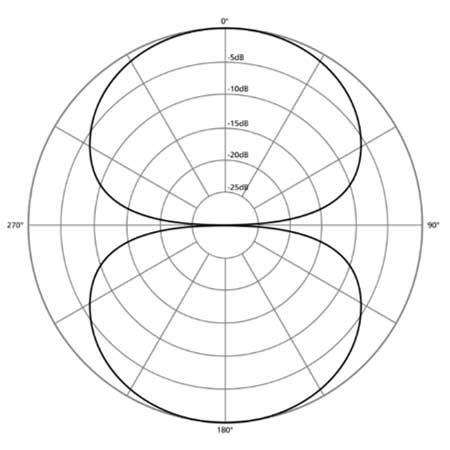
These microphones capture sound between 0 and 180 degrees, which attenuates off-axis. This is the technology used on ribbon microphones (single ribbon only).
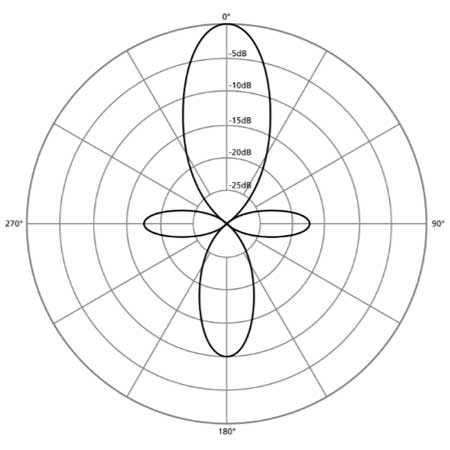
They are sensitive to sound sources located in front and behind the microphone. Sound sources on the sides are not captured.
They work a little differently from other microphones. So-called “figure of eight” microphones establish a pressure difference between front and rear capture.
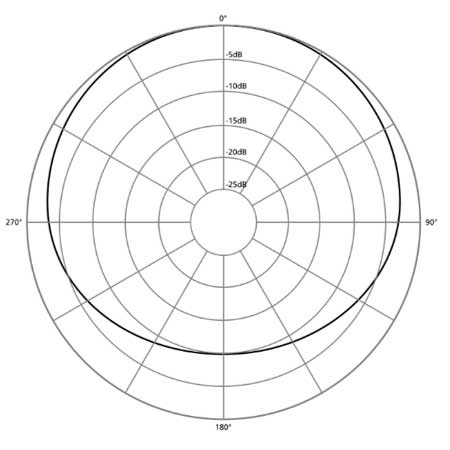
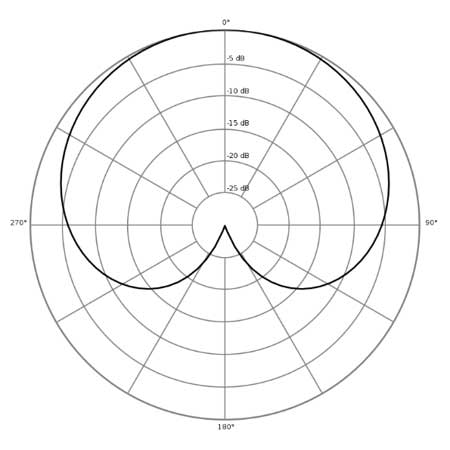
The cardioid microphone (heart-shaped polar curve) is one of the most widely used. It captures the sound source positioned in front of the microphone. The directivity has a maximum sensitivity at 0 degrees (sound arriving in the axis of the microphone) and minimum at 180 degrees (off-axis). If a source is positioned outside of its field of action, it is difficult to hear. They allow ambient noise from behind the microphone to be eliminated. This allows for a form of isolation of the sound source. The cardioid directivity is used on all vocal microphones.
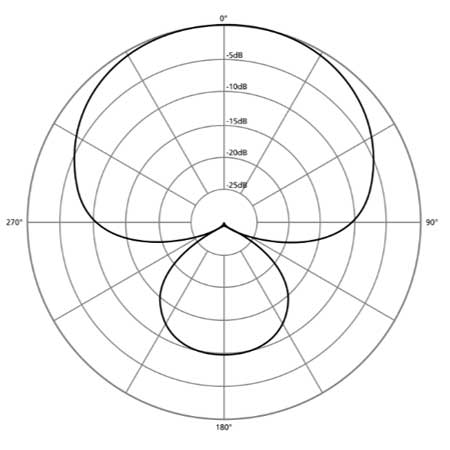
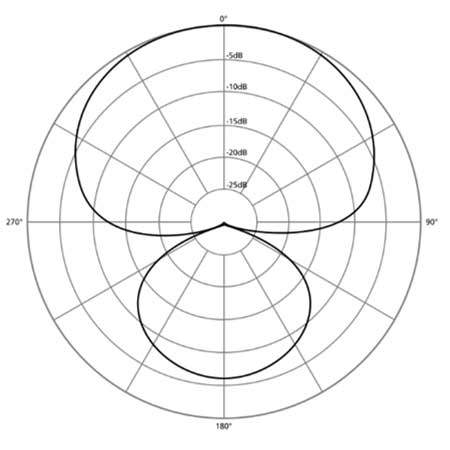
Semi-cardioids, supercardioids, and hypercardioids are cardioid microphones, but with a more or less extended directivity. Supercardioids and hypercardioids capture fewer elements because the capture axis is narrower. These two directivities offer narrower front capture angles than those of the cardioid directivity (respectively 115 degrees for the supercardioid and 105 degrees for the hypercardioid) and better rejection of ambient noise. When well-positioned, these two microphone directivities can offer very targeted capture. However, they have a rear lobe that captures sounds from the rear.
Shotgun microphones, also called canon microphones, are not used in the music industry. They are specialized in reducing off-axis sounds and guarantee very precise capture. These tube-shaped microphones offer increased directivity. They are mainly found in the fields of television and cinema.
We have just seen the characteristics of a microphone (frequency range, directivity and diaphragm size). Microphones are then grouped by their technology. This defines how they capture and record sound.
Dynamic microphones are the most common on the market. They are a very good choice for a first microphone. They capture sound effectively and can withstand very high sound pressures. This makes them ideal for miking drums or guitars.

They are equipped with a moving coil. When a sound wave exerts pressure on the diaphragm, this causes it to move, which in turn causes the coil mounted around a magnet to move. This generates an electrical current that corresponds to the captured sound wave.
They are appreciated for their robustness! They can withstand falls, making them perfect for live conditions. As a result, they are used in many applications, including concerts. The Shure SM58 and SM57 are the most well-known dynamic microphones. The majority of dynamic microphones are cardioid microphones.
Price
Robustness
They are not suitable for all needs.
Condenser microphones are the most common in recording vocals. They are designed to capture clear and smooth vocals. They operate on the principle of static electricity.
They have a thin diaphragm capsule. It is conductive and mobile. They also have a polarized electrode. These two elements are separated by air. When the membrane reacts to the pressure of a sound wave, the distance between the two elements changes, which produces a modulation of capacitance. This results in voltage variations that follow the source signal. All these microphones use phantom power to allow the polarization of the elements.
Condenser microphones are quite fragile and do not like falls! They must be treated with great care to last. Condenser microphones are divided into two groups: small diaphragm condenser microphones and large diaphragm condenser microphones. Only the size of the diaphragm is different. As a reminder, it governs the frequency response. A small diaphragm is suitable for high frequencies. While a large diaphragm has a balanced frequency response.
Very good microphones
Suitable for different types of capture
Wide frequency response
Requires phantom power
More fragile
More expensive
Ribbon microphones are dynamic microphones. However, the technology is slightly different. These microphones have been around for decades. Forget the coil and the diaphragm! It is an aluminum ribbon, measuring just a few micrometers, that plays the main role. Pleated in accordion style for optimal flexibility, it is fixed in the gap of a powerful magnet. The ribbon vibrates when it detects sound waves, which generates an electrical current corresponding to the variations in sound pressure. They tend to produce a warmer sound.
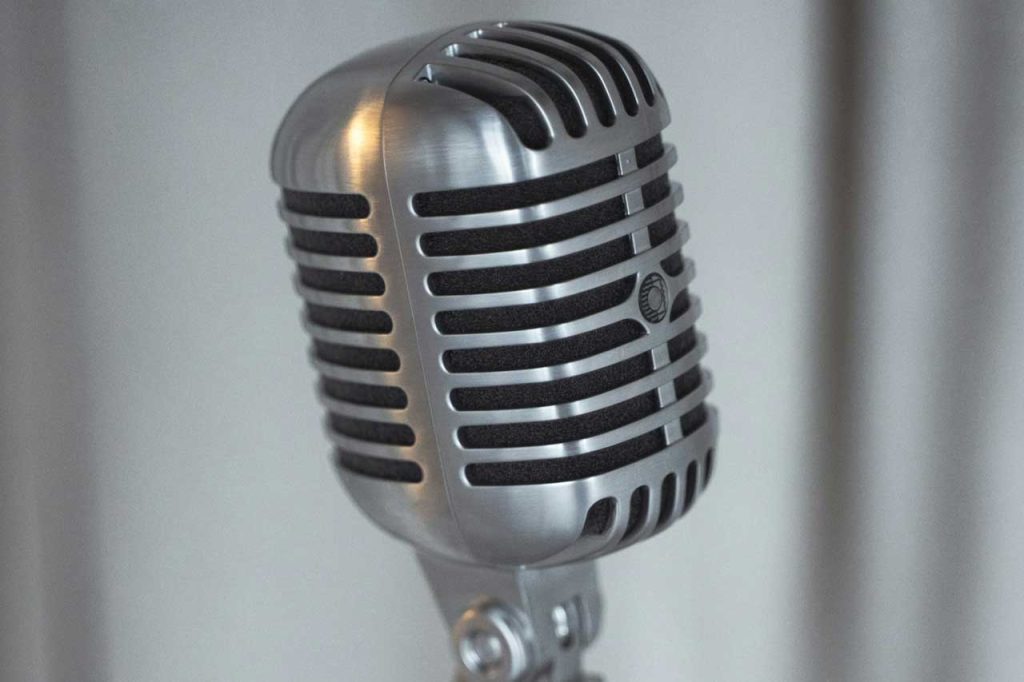
They had their heyday in the golden age of radio! They are much less used today because they are very fragile. They cannot be used in a poorly controlled sound power environment. If the pressure is too strong, they tear. This is why they are more commonly found in studio recordings. They have a low output level and generally require coupling with a preamplifier.
High-quality capture
Warm sound
Very fragile
Requires a preamp
Price
The recording capture conditions are essential. You don’t use the same microphones for live and studio work. Microphones are also selected according to the musical genre produced (metal vs folk or country music). The position of the microphone also plays a big role in the capture. For example, the distance between the microphone and the singer (or amp) influences the sound.
A drum set is not mic’ed up like a voice! There are no real rules, but here is what is generally done.
For recording drums, small or medium diaphragm dynamic microphones are preferred. Their robustness is essential to withstand the sound pressure. For all the high frequencies produced by the snare drum in particular, a small diaphragm dynamic microphone is installed.
For studio vocal recording, a large diaphragm microphone is always used, either ribbon or condenser, depending on taste and choice. The large diaphragm offers a rich sound that many singers appreciate.
For choir recording, an omnidirectional microphone is preferred to record the entire choir.
For a concert, a dynamic microphone is installed that can withstand any sound pressure!
To mic up some guitars, a dynamic microphone is installed in front of the amplifier. This is what is generally used for electric instruments (electric guitar, bass, etc.). In the case of acoustic guitars, a small or medium diaphragm condenser microphone is preferred.
To mic up a piano, microphones are placed inside or above it. Condenser microphones are generally preferred. Obviously, in the case of a recording made in a room with a particular acoustic, it is necessary to consider capturing the natural reverb of the piano and the room.

