
Beautiful Plants For Your Interior
Beautiful Plants For Your Interior
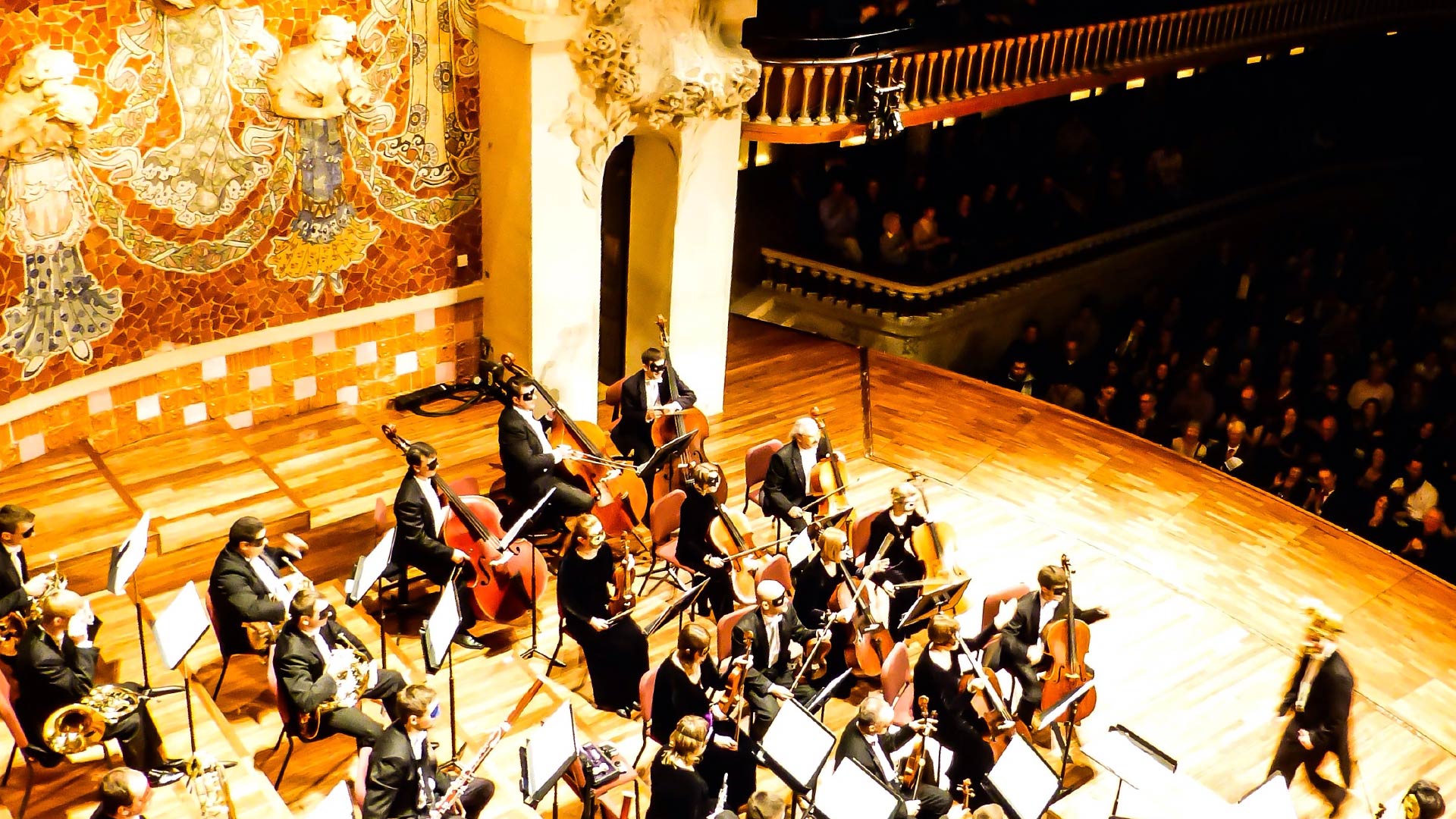
With the exception of dynamics and signal processing effects, reverb and delay are the most commonly used effects in any music production. These two effects have established themselves in the industry because they emulate real phenomena that are known to humans.
In its acoustic sense, reverb is the phenomenon of the persistence of a sound in a closed or open space after the sound source has ceased. Reverb is based on an evolving quantity of direct and indirect reflections on the elements that make up the space. Sound waves bounce off surfaces and mix with each other. These sound reflections generate a more or less distant sound that gradually decreases.
Reverb can be found everywhere. Whether in a concert hall, a church, a warehouse, or a mansion, reverb is naturally generated when a sound fills the space. In everyday life, the most concrete example is visiting an empty house. The reverb of empty houses is special. The acoustics return to normal as soon as you install some furniture that will attenuate the reverb.
Acoustic reverb also exists within acoustic musical instruments. It is the soundboxes of violins, cellos, or guitars. This part of an acoustic instrument defines the soul of a musical instrument. Its role is to receive and amplify the vibrations produced by the strings. It is precisely this acoustic that we capture in our impulse response files.
Artificial reverb, also called reverb, is an audio effect added to an audio signal in order to emulate acoustic reverb. The use of reverb gives an impression of distance and spatialization of the sound.
Artificial reverb has undergone great changes in the history of music. It began its existence through echo chambers. Studio recordings are made in small spaces where acoustic reverb is less. To increase the presence of reverb, the recorded signal was sent through a loudspeaker into a room with strong acoustic reverb: the echo chamber. The sound resonating through the echo chamber was captured by a microphone before being mixed with the original signal. The first echo chamber was invented at the beginning of the 20th century by the BBC, which made many recordings in its studio.
The space required for echo chambers led engineers to come up with less cumbersome methods to simulate reverb. Thus, plate and spring reverbs were installed in music studios.
Plate reverbs are large boxes a few meters long and high in which a metal plate attached to springs is found in the center.
When the metal plate is simulated, a microphone records the reverb. In fact, the speed of sound propagation through this system is slower than in air, which produces reverb.
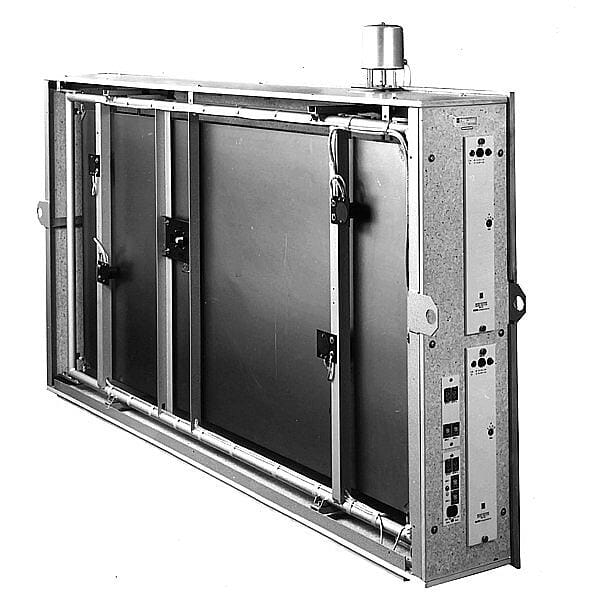
Spring reverbs work on the same principle, but are much smaller and do not have a central metal plate. They were later equipped with many electric guitar amps, defining musical styles in their own right, such as 1960s surf rock.
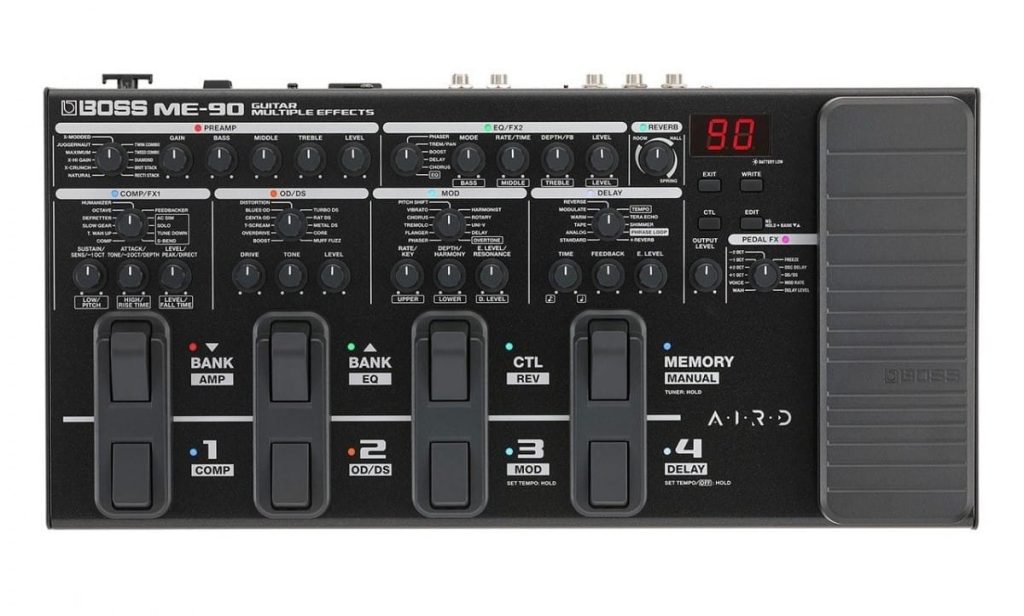
These are the reverbs of today! They are also called algorithmic reverbs. These are the ones found in VST plugins, effects processors, and effect pedals. It is a signal processing process that analyzes the incoming signal and applies transformations to it according to defined parameters.
Convolution reverbs are digital reverbs based on mathematical calculations. They apply to a signal the acoustic characteristics captured in another place. All reverbs based on impulse response files are convolution reverbs. This is precisely what is used to simulate the natural acoustics of a cathedral or an acoustic guitar.
The principle is to send an impulse through the space you want to quantify. Then, the return of this impulse is captured using a microphone positioned in the same space. An impulse response file (IR file) is obtained which can be imported into convolution reverb plugins or devices. This type of reverb is used in many fields such as cinema. They are more realistic than classic digital reverbs because they are based on what already exists! However, they require much more computing resources.
Well-known to everyone by its daily presence, the delay bears its name correctly. It is a clear and identifiable repetition of a sound after the sound source has stopped. The most concrete image to define it is to imagine yourself at the top of a mountain while facing other mountains, shouting “echo” and hearing “echo” back a little later. The natural phenomenon is simple. The sound wave bounces off an opposite side and distinctly returns to your ears, but with less vigor and energy.
Digital delay reproduces natural delay. It copies the sound you give it and repeats it after a certain time. Digital delays allow you to adjust delays according to different parameters such as the time before the repetition occurs. The majority of music productions use delay plugins that will analyze the music and time the delay to the tempo of the song to obtain something harmonious and coherent.
Delay is literally a delay applied to the input signal. When the source signal is read, a delay effect is launched, which mixes with the source signal to generate an “echo.”
Reverb focuses on the aspect of sound wave reflections through a predefined space. It uses settings for duration, reflection, density, absorption, level, filters, etc. All of this specifies the sound characteristics of a space. Generally, a reverb has presets defining locations: room (simulation of a small room), chamber (simulation of a living room), hall (simulation of a voluminous space), and many others.
The difficulty in understanding reverb lies in the fact that reverberation is everywhere. It is a phenomenon integrated by our brain that we no longer pay attention to. However, there is acoustic reverberation in every place you go. If you have the opportunity to enter an anechoic chamber (or soundproof chamber), you will become aware of the existence of acoustic reverberation. Anechoic chambers have walls that absorb sound waves, which annihilates reverberation.
Let’s look at a few examples of use. Keep in mind that these are just examples! Delay and reverb effects can be used in a multitude of ways. The goal here is to give you an overview of what is done.
Reverb is the key element to define a space and give the feeling that one or more sounds exist in order to give presence to a music. It is found in almost all music productions. Many artists have even defined their universe with it, notably Sigur Rós.
Reverb is often present in songs with a fairly slow tempo. This slowness is a favorable ground for the use of reverbs. They have the necessary space to bring something positive to the mix. When listening, the listener takes advantage of this slow tempo to hear the changes in the reverbs over time and in the defined space.
On the other hand, on fast-tempo tracks, reverb can quickly saturate the mix due to these many sound reflections. The listener is then unable to interpret the reverbs that intertwine with each other, generating an accumulation of indistinct sounds over time.
Excessive reverb can harm a mix. Its overuse can completely destroy everything you have previously built. Too much reverb results in an incoherent mix, drowning the instruments in a distant cacophony of diffuse, disordered, and omnipresent sounds. This is a common mistake when starting out in music production. It is advisable to limit the amount of reverb in a mix! Very often, a short reverb and a rather long one will be defined and applied to certain tracks.
If you have the feeling of having a mix diluted in your reverbs, what is called a muddy mix, reduce the presence of these reverbs. “Muddy” is the term that defines an overrepresentation of reverb in the mids, impacting the clarity of the mix.
Delay is frequently used to add groove to percussion elements. It is necessary to find a happy medium between the tempo of your song and the place of your delay. Some percussive elements may have their own delays to obtain a form of presence among the other percussions.
In the processing of the signal produced by a musical instrument, a delay and a reverb are often combined. This is even more true if the instrument is electric or recorded directly from its jack socket! The voice lends itself extremely well to the use of reverb and delay. On the other hand, drums and percussion are treated differently. A reverb or delay applied to a drum set can quickly become a sonic nightmare due to a lack of rhythmic precision. This is to be done with caution!

