
Beautiful Plants For Your Interior
Beautiful Plants For Your Interior
Are you a musician looking to expand the sound possibilities of your violin or viola? Let’s explore together how to achieve the sound of a viola or cello with a violin, or the sound of a violin or cello with a viola. There are several ways to achieve this, which we will detail in this article.
We won’t focus on all the structural differences between these three bowed string instruments. Let’s focus on their sound capabilities!
The violin, viola, and cello have 4 strings tuned in fifths, but they don’t use the same range and thus different strings:
Between the violin and the viola, there are three identical strings: G, D, and A, and one string that differs: a high E for the violin, and a low C for the viola. This means that a fifth separates the two instruments. The viola is tuned a fifth lower than the violin. The cello overlaps the lower frequencies of the viola and the violin. The cello and viola are an octave apart.
To situate the three instruments, we base ourselves on the viola, which is a fifth below the violin, and an octave above the cello.

There are C strings adapted for violins, and E strings adapted for violas. They are mainly used for electric violins and violas with 5 strings using the following strings: C, G, D, A, E.
C strings for violin can easily be found on the string market for bowed instruments. Almost all brands offer one, including Thomastik or D’Addario. Make sure the string is designed for violins. C strings for viola are too long for a violin. The tension is insufficient to produce an interesting sound.
Since the C string is lower, its diameter is larger than that of the G string. This can be a challenge when trying to insert it into the tailpiece. Sometimes, manufacturers provide the string’s diameter in the product details. Be sure to check it to avoid some inconvenience. This same issue may arise when replacing the E with an A at the nut and bridge.
This is an interesting procedure to transform a second violin into a viola. However, we do not recommend making this change if the violin is your main instrument! Prefer a second instrument dedicated to this, or consider investing in a 5-string acoustic violin.
E strings for viola are rarer but can be found. They allow the viola to have the range of a violin. Their rarity is due to the smaller market for viola strings compared to violin strings!
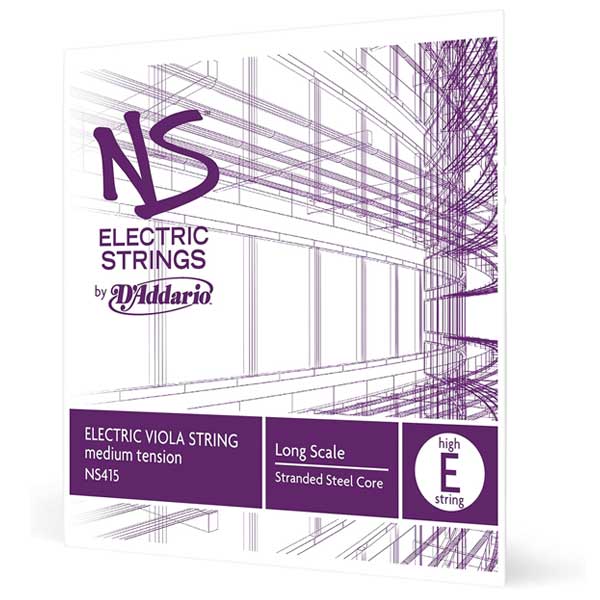
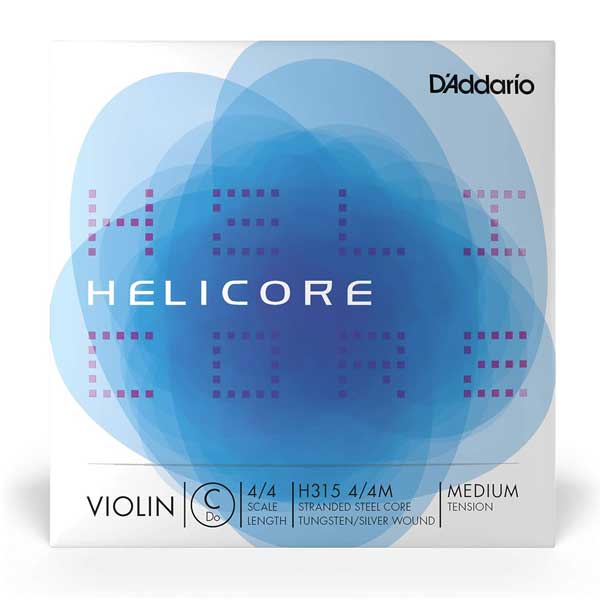
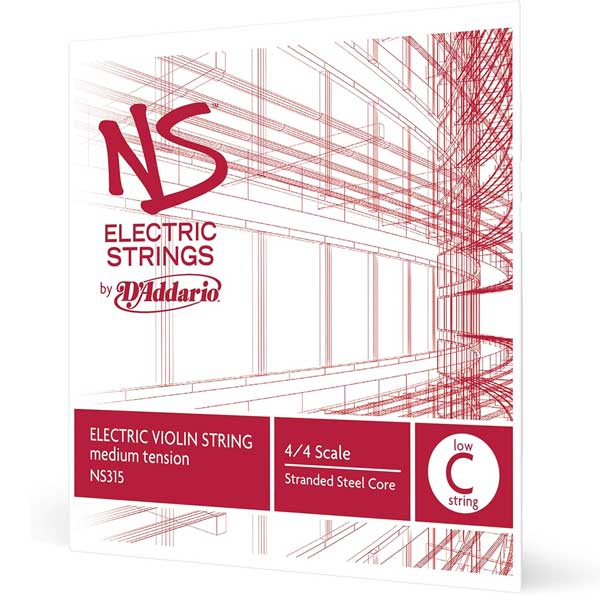
Octaver strings (or octave strings) are strings tuned an octave below those of the targeted instrument. Octave strings for violin exist, for example. An octave below the violin’s range brings the violin’s sound closer to that of a cello. The main drawback of these strings is still their diameter! As explained in the previous paragraph, the diameter doesn’t always fit the tailpieces and nuts of acoustic violins. Sometimes adjustments are necessary to install them correctly. If you encounter this problem, consult a luthier!
The responsiveness of the strings and the resonance of the instrument are reduced. The diameter of the strings makes them less responsive. Moreover, a violin bow is not designed to achieve perfect vibration on this type of string. Finally, the smaller resonance body of a violin results in less deep and full sound.
To date, octave strings for viola no longer seem to exist on the international market! Therefore, it is not possible to use octave strings with a viola.
If you don’t want to modify the strings on your viola, using an impulse response file is an excellent solution to achieve the sound of a viola with a violin, and vice versa.
An Impulse Response file is a small audio file containing the acoustic fingerprint of an instrument. An IR file thus represents a single, unique instrument, the one used during the generation of the impulse response.
In specific conditions, an engineer generates this digital audio file. An IR file can represent various elements such as a musical instrument like a viola, an acoustic environment like a cathedral, or a sound reproduction system like an amplifier. Each element involved in capturing influences the generated acoustic characteristics. For example, the impulse response of an acoustic violin in a church with the main doors closed can be captured. If a second capture is made, but with the main doors open, the result is different.
Impulse Response files are then loaded into plugins or devices (effect processors or IR loader pedals). They apply the captured conditions to the original signal. This is a technique commonly used by electric violins when they want to reproduce an acoustic sound. But it can also reproduce the sound of a viola with a violin. The frequencies between the two instruments are very close. Using a viola IR file with a violin, and vice versa, works without any issues!
However, using cello IR files for a signal produced by a violin or viola yields less satisfactory results. An impulse response created from a cello contains information related to that instrument. Applying it to a violin signal cannot provide the same satisfaction as applying it to a cello signal. The frequency ranges are drastically different! So is the result!
In this video, a raw signal is compared to the same signal to which a violin impulse response is applied. You can find all our acoustic IR files.
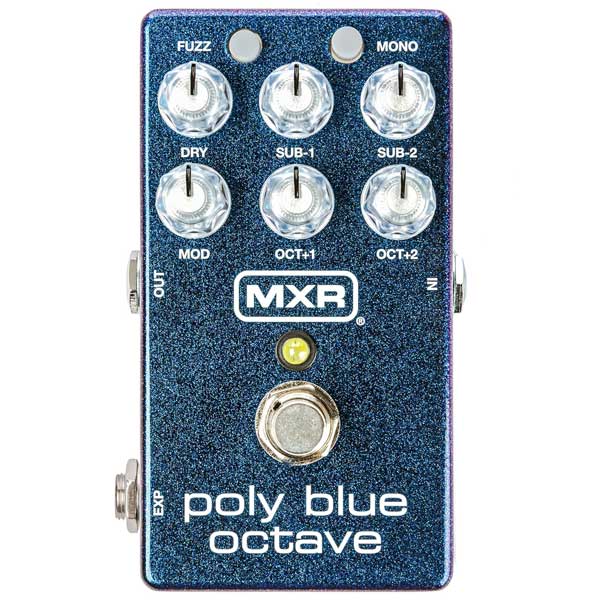
An octaver pedal is an effect that transposes the original audio signal one or two octaves below or above. The signal undergoes digital audio processing.
There are monophonic or polyphonic octavers. Monophonic octavers transpose only one note at a time, while polyphonic ones handle chord playing.
Some octavers are limited to octave transposition, while others can perform fifth transpositions.
Thanks to lower transpositions, octaver pedals bring the violin’s sound closer to that of a cello and viola. By using higher transpositions, the octaver pedal becomes useful for the cello aiming to approach the range of a viola and violin.
There are many octaver pedals available on the market! They are all designed for guitars! For use with a violin or another bowed string instrument, we strongly recommend testing the equipment! The complexity of bowing complicates the transposition. It’s likely that, from time to time, your octaver will lose track!
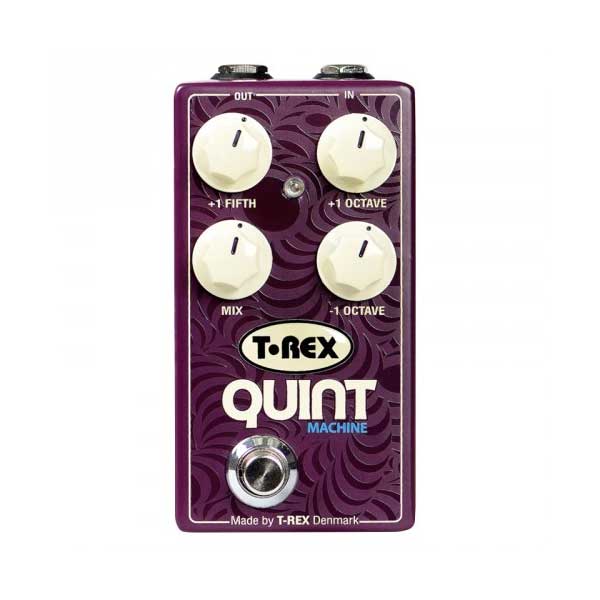
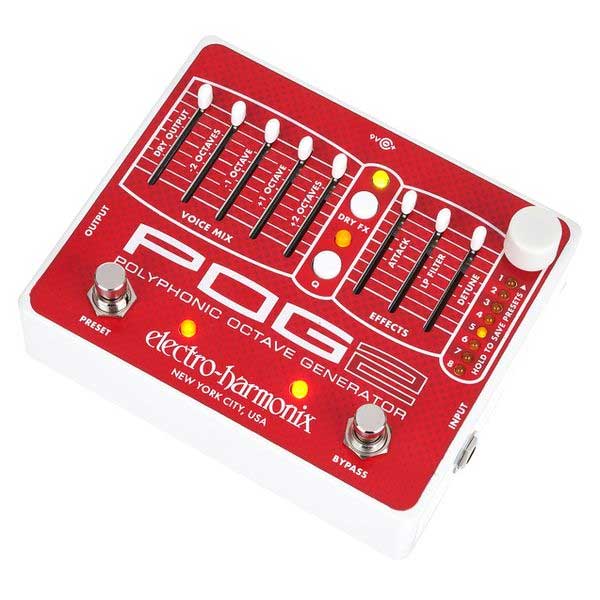
You have four solutions to get the sound of a violin, viola, or cello with one of these bowed string instruments. Of course, regardless of the chosen solution, you will never replace the real instrument! These are alternative playing options that extend an instrument’s sound possibilities! This is often very useful for playing in certain quartets and music groups!
