
Beautiful Plants For Your Interior
Beautiful Plants For Your Interior
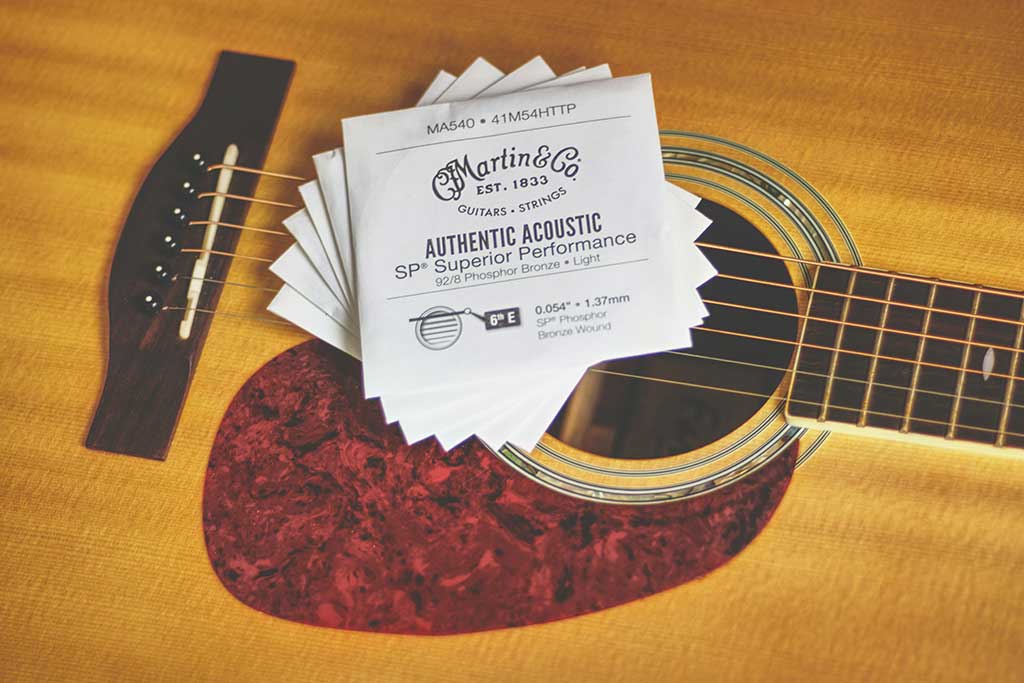
Founded in 1833, C.F. Martin & Company is one of the oldest manufacturers of acoustic guitars. The brand is renowned for its high-quality acoustic guitars, appreciated for their rich, powerful sound and refined craftsmanship.
If you are not familiar with the history of C.F. Martin & Company, we have detailed it in an article entitled: The History and Legend of Martin Guitars.
The Martin D-28 guitar has left its mark on music and remains one of the most iconic guitar models in the world today. Launched in 1931, it has become an industry standard. Its manufacturing quality, sound power and the richness of its tone have made it iconic. Many guitarists have played or played a Martin D-28, including Jimmy Page, Bob Dylan, John Lennon and Eric Clapton. It is for this recognition that we offer impulse responses of the Martin D-28 guitar.
The Martin D-28 combines different types of wood. It has a spruce top and uses rosewood for the back and sides. It offers a balanced and deep sound with excellent bass presence.
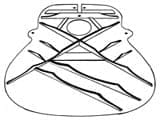
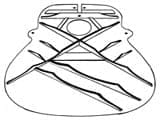
C.F. Martin & Co. is at the origin of major developments for guitars, notably with the X-bracing that the D-28 model features (see attached photo). This X-bracing is partly responsible for the projection and sound qualities of the D-28 guitar. The D-28 model is played by all types of guitarists, whether they are country, rock or folk musicians. It is very popular with fingerstyle players.
The Martin D-45 acoustic guitar is a high-end model. It is part of the Martin Standard series alongside other iconic models. The D-45 was introduced in 1933 and is still considered today to be the ultimate acoustic guitar.
The D-45 guitar offers a rich and deep sound. It has very clear highs and present and warm lows. Thanks to the X-bracing, the guitar’s resonance and therefore sound projection are very important. It is the ideal instrument for group performances. Like its sister, the D-28, it can be found in folk, blues and country bands. Its legend is also due to the great names who have played or still play it, including guitarists Gene Autry, Neil Young, Johnny Cash and John Mayer. We offer impulse response files for the Martin D-45 guitar.
In terms of construction, the D-28 and D-45 have many similarities. First, they both use spruce for the top, and rosewood for the back and sides. This combination has become a standard in acoustic guitar making. They are both based on the Dreadnought shape, with the neck joining the body at the 14th fret. They also both use the X-bracing pattern, known as the Forward-Shifted X-Brace. However, there is a slight difference in the bracing. The D-45 has scalloped bracing, while the D-28 does not. Scalloped bracing is thinned out to reduce the mass of the instrument. It adds flexibility to the top, making it easier for vibrations to travel. This change in bracing results in a difference in the sound of the instrument and the feel of the guitar to the player.

The differences between the two models also lie in the subtlety of their components. The D-45 has a more elaborate design with more detailed inlays using other woods such as abalone. Purists tend to describe the sound of the D-45 as richer and deeper. Overall, the Martin D-45 is a more expensive guitar than the Martin D-28, but it also has a more elaborate design and a richer sound. If you are looking for a high-quality acoustic guitar with a beautiful appearance and a warm, full-bodied sound, the Martin D-45 is a great option.
The Martin D-18 is another model of folk acoustic guitar with a Dreadnought shape that has made history in the world of guitars. Introduced to the market in 1934, it remains a must-have among guitars.
This guitar is made of spruce and mahogany with scalloped X-bracing like the D-45. The neck profile is the Modified Low Oval which offers a smooth transition between the neck and the fingerboard. The playability of the Martin D-18 is excellent. It offers a warm, balanced and powerful sound. The Martin D-18 is a versatile guitar that is well-suited for a variety of styles of music.
The Martin D-18 has been played by many renowned guitarists such as Bob Dylan. But its greatest moment of glory came when Kurt Cobain used a D-18 during the recording of the live album MTV Unplugged in 1993. He played with a Martin D-18 modified electronically, notably so that it could be plugged into an amplifier. This guitar was sold on June 21, 2020 for $6,010,000, a record for the resale of any guitar in the world. For comparison, on June 1, 2020, the D-18 guitar that belonged to Elvis Presley was sold for the sum of $1,320,000.
The D-18 is often compared to the D-28. Both guitars share the same Dreadnought body shape. However, the D-28 is distinguished by its rarer tonewoods and refined ornamentation. The two models do not use exactly the same X-bracing. It is unscalloped on the D-28 and scalloped on the D-18. As a result, the sound qualities are different between the two instruments.
There are many factors that can differentiate Martin guitar models, including the body shape, body size, neck profile, and the woods used in the construction of the instrument. Below pictures of all Martin guitars quoted previously: D-28, D-45 and D-18.

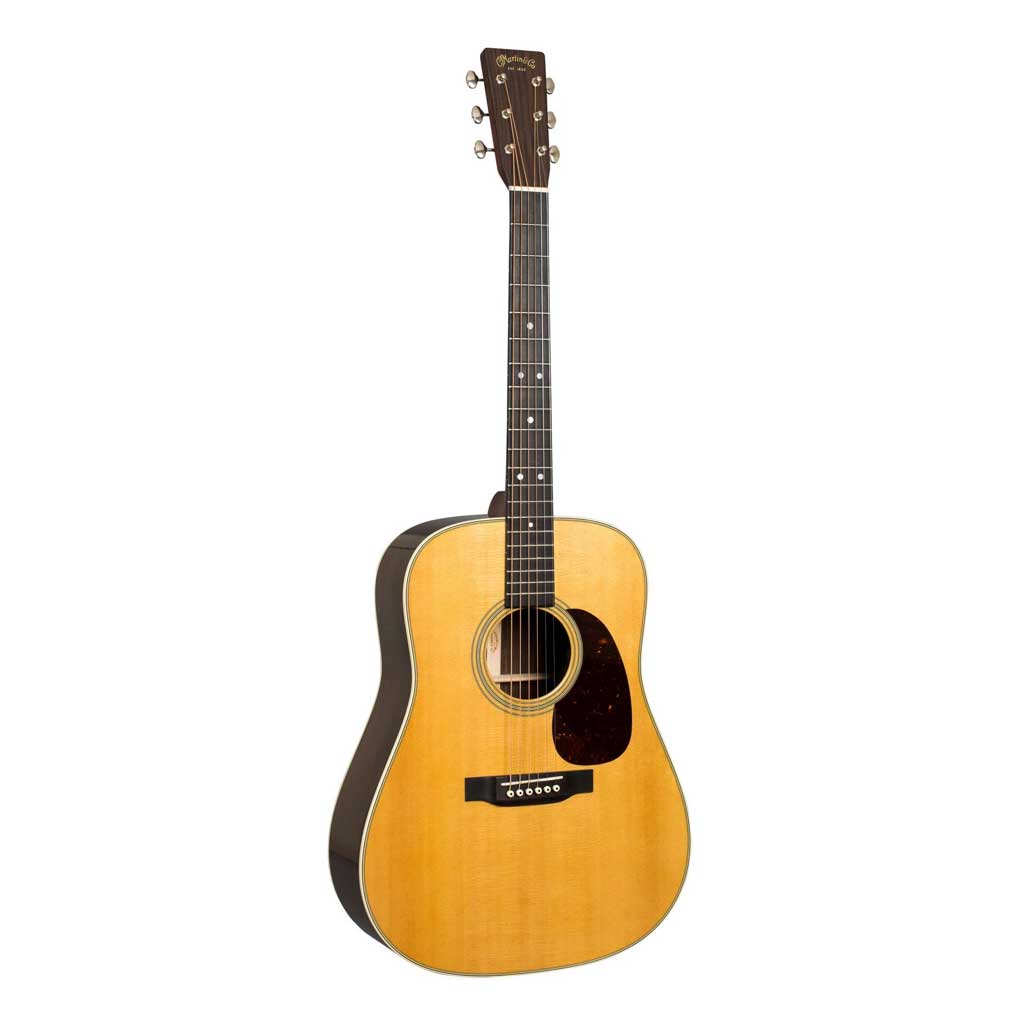
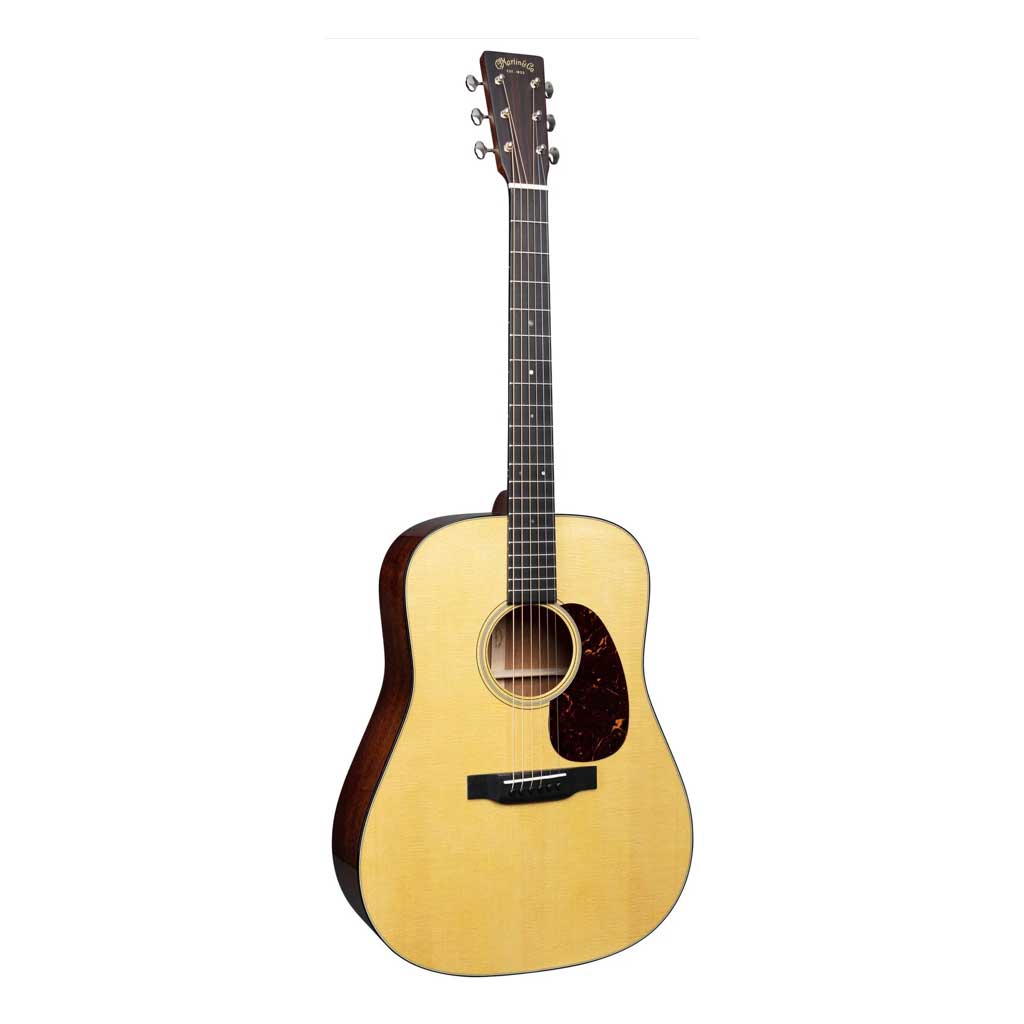
Although the C.F. Martin & Co company, which makes Martin guitars, is the originator of the Dreadnought shape, they offer guitars of different shapes. The body shape of a guitar affects the sound and playing comfort. The Dreadnought model has been copied by almost all manufacturers and has become the most famous shape on the guitar market today. Dreadnought guitars are larger and have a large sound projection. C.F. Martin & Co also offers the following shapes: 0 (small body), 00 (intermediate body), 000/OM/Performance (large body). These are a bit smaller than the Dreadnought and have a more balanced sound. Finally, the Grand Performance models are a compromise between the previous models.
The larger the body of the guitar, the more powerful the sound it will produce. The smaller-bodied “0” models have less power, but have the advantage of being more responsive.
Each model uses different woods for the different parts of the guitar. The type of wood and its quality affect the sound. The most important parts are the bracing, the back and the soundboard. Spruce is one of the most commonly used woods for the soundboard. Mahogany and rosewood are used for the back and ribs. However, Martin guitars are sometimes made from other woods. Martin offers the manufacture of custom guitars. The guitarist can select the woods used.
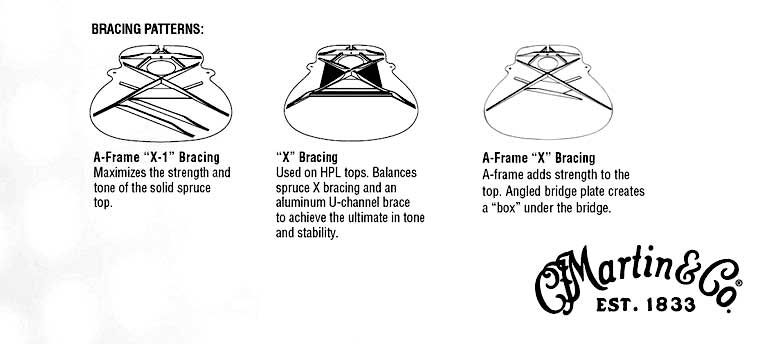
Bracing is a reinforcement system positioned under the soundboard. It stiffens the instrument and affects the transmission of vibrations through the body of the instrument. Martin models use different bracing such as the unscalloped or scalloped X-brace, or the X-series brace dedicated to this range of guitars. Here are some examples of bracing used on Martin guitar models.
Each Martin model has different finishes, particularly in terms of the neck profile. C.F. Martin & Co offers evolving neck profiles. The Modified V profile is one of the most famous. It is a vintage model with a “V” to improve playability. The Performing Artist profile is designed for guitarists who play both electric and acoustic guitars. The Low Oval and Modified Low Oval offer greater playing comfort for musicians with small hands, as the neck is thinner. Finally, the Low Profile neck profile is the standard model used on most guitars.
Other customization options are available, including fingerboard inlays, a special pickguard, and the use of rare woods in specific places.

