
Beautiful Plants For Your Interior
Beautiful Plants For Your Interior
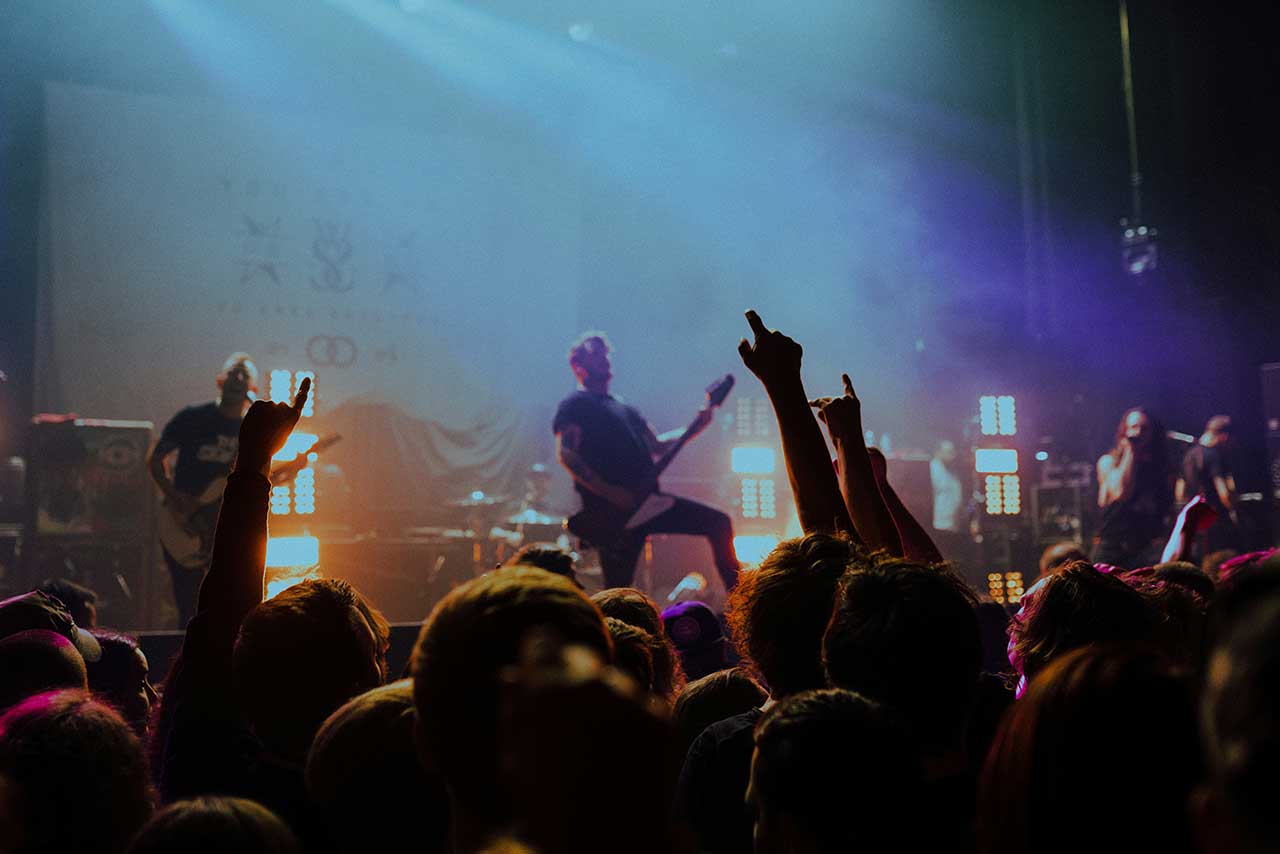
Drop D tuning is an alternative tuning that unlocks new playing techniques for the guitar. Popularized in rock and metal, it significantly expands the tonal palette of a guitar. By lowering the low E string by a whole step to D, drop D tuning alters the guitar’s harmonic and frequency structure. This article explores the benefits of this alternative tuning and highlights its use by notable artists.
A standard guitar tuning is E-A-D-G-B-E. In drop D tuning, the tuning becomes D-A-D-G-B-E (D2-A2-D3-G3-B3-E4 – from E : 6th string -2 semitones). Drop D tuning involves lowering the low E string to a D. This tuning is very common in metal and sometimes used in classical guitar compositions.
| Standard Tuning + Frequencies | Diff. | Drop D Tuning + Frequencies |
|---|---|---|
| Low E (82.41Hz) | – 1 pitch | D (73.42Hz) |
| A (110Hz) | A (110Hz) | |
| D (146.83Hz) | D (146.83Hz) | |
| G (196Hz) | G (196Hz) | |
| B (246.94Hz) | B (246.94Hz) | |
| High E (329.63Hz) | High E (329.63Hz) |
See below a reference regarding the drop D tuning for guitars. The table represents the notes with the octaves on a 24 frets 6 strings in Drop D. The octave numbers are based on the SPN (Scientific Pitch Notation), also known as ASPN (American standard pitch notation) or IPN (International Pitch Notation). Click on the pic in order to display the table in its large view.

We edited a special memo about many guitar tunings including Standard, Drop, Flat and many more tunings.
You can either use a tuner or learn to do it by ear. To do it by ear:
Using a tuner sometimes does not account for the desired tuning, emphasizing the importance of knowing how to tune it by ear. This alternative tuning allows playing D power chords using your index finger. This is one of the primary uses of drop D tuning. We’ll expand on this later.
After tuning to drop D, string frequencies evolved. You have now: D-A-D-G-B-E (D2-A2-D3-G3-B3-E4). Regarding frequencies, it looks like:
No. Replacing the string isn’t necessary to lower the tuning. Breaking the string is less likely since you are loosening, not tightening. Problems typically arise when trying to raise the tuning. Drop D tuning simply loosens the low E string.
Some guitarists recommend changing the string gauge to compensate for the reduced tension on the low E string. This is a great idea if you frequently play in Drop D tuning. Thicker, heavier gauge strings are ideal for drop D. If you typically play with 10-46 gauge strings, as many guitarists do, consider switching to 10-48. The added thickness on the low E (now D) string provides more rigidity and responsiveness. You could even use 10-52 gauge. This can produce a very heavy and powerful low D tone; however, the harder string material can reduce playing comfort.
Some drop tunings, particularly drop A and drop B, require neck adjustments for comfort. Drop D tuning does not typically need adjustments. The difference in tension between standard and drop D tuning is not substantial. The few millimeters difference between .046 and .048 gauges are minimal. The difference is more noticeable with 10-52 strings. It depends on whether your playing comfort demands alteration. Modification is certainly not a requirement.
Dozens of alternative tunings exist for guitar, including drop B or drop C. Drop D tuning is one of the most common. It is vastly popularized by its widespread use in rock and metal songs. Alternative tunings are not a new concept, but have been used by guitarists for decades. Innovative guitarists have experimented to achieve new chords and harmonies.
Alternative tunings enable departure from the standard guitar sound. They provide guitarists with new tonal possibilities that invite more creative composition.
Drop D tuning provides a practical way to expand a guitarist’s musical possibilities. It offers a unique approach to guitar playing; adding power to a riff or deepening the tone of a piece. The distinct quality of Drop D tuning is its extension of the guitar’s range by one whole step downwards. This slight adjustment affects playability, tone, and the guitar’s technical possibilities.
If you use standard tuning, you’ll need three fingers to play a D chord. Using index, middle, and ring fingers across the three upper strings, you pluck the strings below the D-string (E-A-D-G-B-E).
However, with drop D tuning, you can play the D chord with all six strings. This results in a richer, more impactful sonic experience.
Drop D tuning simplifies playing the D power chord with just your index finger. A power chord is a basic guitar chord consisting of the root note and the fifth. This creates a diatonic interval of either a major or minor chord.
When playing a power chord, the root note’s fundamental frequency is played, but other frequencies (harmonics) support and surround it. In a power chord, the strings resonate together and their harmonics combine. This convergence creates a rich and powerful guitar timbre resulting in the “power” characteristic.
A standard tuning power chord incorporates three notes and requires several fingers. A drop D power chord uses only two: the D root note and the A. So, you can play a D power chord by striking only the lower strings: D-A-D-G-B-E. This results in a thick sound, often heard in heavy metal guitar styles! Drop D simplifies chord changes, making them quicker.
YouTube is filled with countless videos demonstrating exercises for practicing drop D tuning, catering to genres like metal, rock, blues, etc. These provide guidance for single-finger techniques, improvisation, and scale practice, making it an effective learning tool.
Drop D tuning is widely used across all rock and metal genres, with almost all bands incorporating it into various songs. Generally, guitarists use power chords for rhythm or lead sections, supporting vocals, or adding heaviness and power to the mix.
Drop D tuning suits certain genres well, but not all. In certain cases, other alternative tunings or standard tuning might be more suitable. It’s not common in jazz. Every technique and tool fits particular needs and genres.
It is notable that this tuning feature plays a role in the song “Killing in the Name” by Rage Against the Machine. Guitarist Tom Morello is responsible for the riff of this song. The idea came to him while working with one of his students, exploring alternative tunings. Drop D tuning is also apparent in songs like “Beautiful People” by Marilyn Manson, “New Born” by Muse, “My Own Summer” by Deftones, “On A Plain” by Nirvana, and “One Step Closer” by Linkin Park.
Drop D tuning opens new musical dimensions for guitarists. It offers a new perspective on guitar playing. Easy to implement, it’s become a favorite among prominent rock and metal artists. Learning drop D tuning is an additional technique to expand your playing style. It enhances creative possibilities, builds repertoires, and motivates different ways of playing.

