
Beautiful Plants For Your Interior
Beautiful Plants For Your Interior
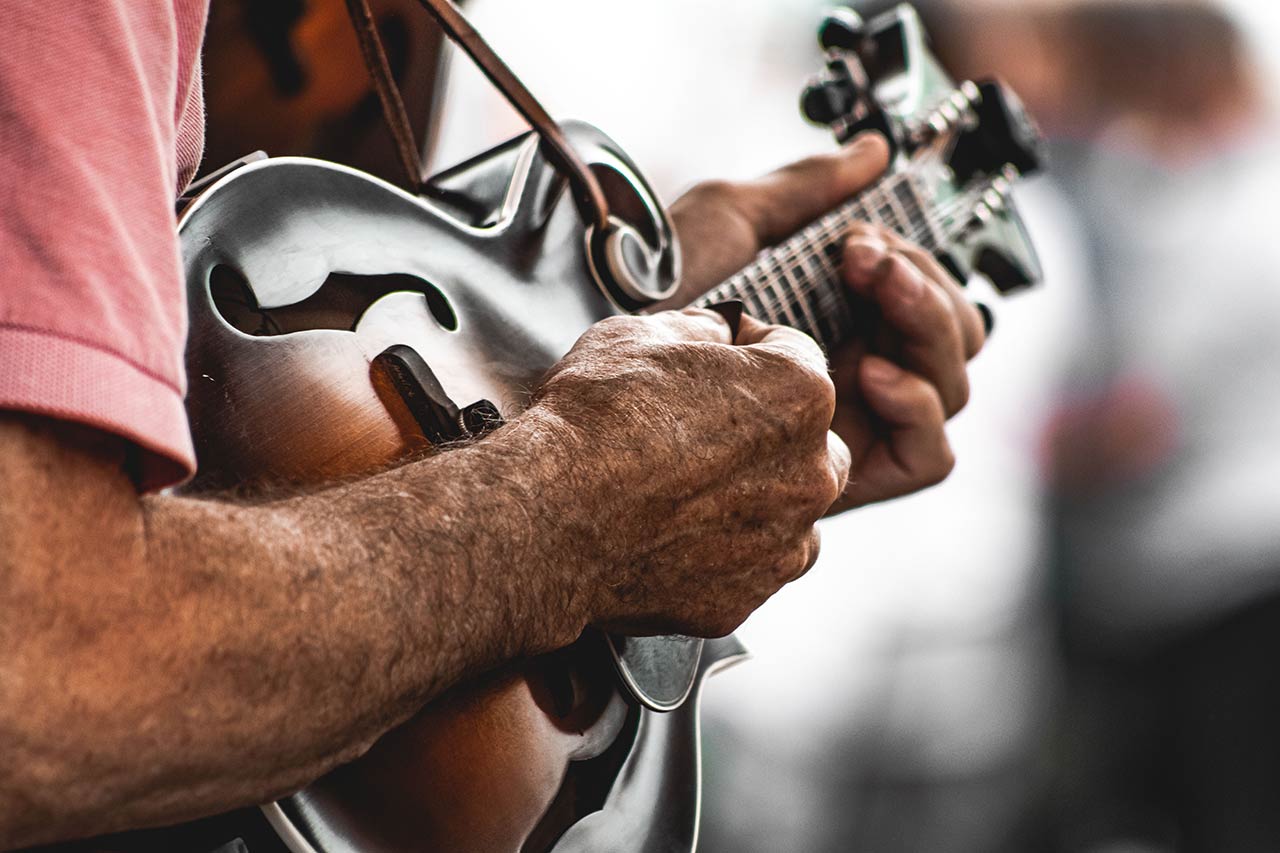
The mandolin is a plucked string musical instrument originating from Italy. It is an instrument with origins tied to the short-necked lute, used in classical, folk, or traditional music. This lute emerged in Italy in the 16th century but became more widespread in the 17th century across Europe. The mandolin is generally considered to come from Italy.
The mandolin does not have a single identified inventor, as it resulted from a progressive evolution of lutes and related instruments in Europe, especially in Italy, between the 17th and 18th centuries.
In the 17th century, there were two types of mandolins: the Neapolitan mandolin and the Milanese mandolin. Each model had distinct characteristics (lute-making, shapes, design, etc.) and pitch ranges. Of these two, only the Neapolitan mandolin remains in use today.
The Neapolitan mandolin is generally attributed to the Vinaccia family of luthiers in Naples, who standardized and modernized the instrument during the 18th–19th centuries, notably with Pasquale Vinaccia around the 1830s.
The mandolin is also associated with bowed string instruments in compositions by Antonio Stradivari. He designed several mandolins in addition to these famous classical violins. Moreover, Antonio Vivaldi composed a concerto for mandolin in C major. Beethoven also created several works centered around the mandolin. When concertos are composed specifically for an instrument, it signifies recognition of its importance.
The mandolin used today has moved away from the lute’s shape and adopted a pitch range tuned in fifths, similar to the violin and viola. It lost prominence during the early 1920s but later regained popularity, particularly among bluegrass musicians.
Several people have marked the history of the mandolin. Apart from Antonio Stradivari, who remains one of the most influential luthiers, we can mention Giuseppe Pettine. He performed great mandolin performances after his family immigrated to the United States. He is also at the origin of a method for learning the mandolin, he made several mandolins and also composed works dedicated to the mandolin. We will see a little further down some names of contemporary mandolinists.

A mandolin has 4 pairs of metal strings with frequencies equivalent to the violin. The strings are: G, D, A, and E, from the lowest to the highest pitch, as in violin tuning. Each string is doubled, forming pairs tuned to the same note. They are installed two by two side by side, tuned to the same note.
The mandolin is played by plucking the strings with a pick, also known as a plectrum. There are numerous playing techniques for the mandolin. The mandolin’s double strings allow for certain playing techniques. Tremolo is one of them. It involves alternately playing the two strings tuned in unison to play sustained notes. It is also called “pennate“. The movement consists of performing two consecutive plectrum strokes played on both strings. When a mandolinist performs a tremolo, they play a series of consecutive pennates.
Picking, or plucking, is another mandolin playing technique. It involves using the fingers to pluck the strings one by one. It is a playing technique also used on the guitar. It is widely used in blues and country music.
Rasgueado, another technique originating from flamenco guitar, is used by mandolinists. It consists of playing rhythmic notes instead of melodic ones. The fingers of the right hand strum multiple strings at once.
Since the mandolin has never been standardized in terms of size and shape, it exists in multiple forms. Today, the flat-backed type A and F mandolins, also called Gibson mandolins, and the round-backed mandolin, also known as the Neapolitan mandolin, are the most common. Gibson models are popular among many contemporary artists, while the latter is often used in classical music.
The Neapolitan mandolin features a highly rounded resonator. It has an oval soundhole located on the soundboard.
Its bulging appearance is often compared to a pear shape. Its neck is narrower and shorter than other mandolin models played today.
It is the most commonly used mandolin in Baroque and classical music and is played by many mandolinists worldwide.
The Neapolitan mandolin is an emblematic instrument of the musical culture of Naples and the Campania region in Italy.
This type of mandolin is harder to find on the market as they are crafted by independent luthiers. To acquire a quality one, seeking out these artisans is essential!

The Gibson mandolins type A and F are two evolutions of the Neapolitan mandolin. They emerged in the 20th century in the United States. Their creation is attributed to Orville Gibson, founder of the famous Gibson company. He drew inspiration from the craftsmanship of bowed string instruments (violin family) to invent them. These have become reference models for mandolin luthiers!


These two models are primarily used in bluegrass and country music. They feature a slightly arched soundboard and an almost flat body. Their necks are somewhat wider than their Neapolitan counterpart.
Each of these mandolins has its unique shape. The type A mandolin is an elongated and rounded evolution of the pear shape found in the Neapolitan mandolin. The initial shapes have been stretched in width, resembling an almond.
The design of the type F mandolin bears little resemblance to the Neapolitan mandolin. Its curves have become a reference in mandolin craftsmanship, reminiscent of guitars. The design evolutions of the Gibson type F mandolin have been adopted by many luthiers.
The Gibson type F mandolin features f-shaped soundholes similar to the violin and viola, directly inspired by bowed string instruments. Meanwhile, the Gibson type A model retains the traditional oval soundhole positioned beneath the strings, as seen in the Neapolitan mandolin. Don’t miss our Gibson F2 mandolin impulse response file.
Equivalent to the viola in the bowed string family, it is tuned: C, G, D, A (from the lowest to the highest pitch).
The mandocello is tuned an octave lower than the alto mandolin. This instrument is the equivalent of the cello in the bowed string quartet.
The mandobass is the equivalent of the double bass in the bowed string quartet. This instrument has four strings tuned in fourths: E, A, D, and G, like the acoustic double bass. The mandobass was manufactured by Gibson in the early 1900s.
There are dozens of musical instruments inspired by the mandolin. Many countries have their traditional mandolins! Here are a few, with the countries where they are played in parentheses: bandolim (Portugal, Brazil), bandurria (Spain), saz (Turkey, see the video below), bouzouki (Greece), banjoline (United States), Irish mandolin (Ireland), mandole (Algeria), etc.
Practically speaking, a musical instrument can be played in any style of music. There are no rules! The mandolin appears in various musical styles, each exploiting its unique qualities.
The mandolin has a long tradition in classical music, particularly in Italy, where composers like Vivaldi, Beethoven, and Mozart dedicated works to it. It is used for its finesse and expressiveness, either solo or in small ensembles. Below is a video of mandolinist Avi Avital, known for his performances and interpretations of baroque pieces and traditional pieces on the mandolin. Other notable players include Vincent Beer-Demander and Julien Martineau.
In bluegrass, a distinctly American genre, the mandolin plays a central role alongside the guitar, banjo, and double bass. Its rapid execution and percussive role make it a rhythmic pillar. Artists like Bill Monroe, the founder of bluegrass, popularized its use in this style. We can also mention the American mandolinist Chris Thile, founder of several bluesgrass groups.
In Celtic music, the mandolin is often used for its light, fast melodic lines. It accompanies jigs, reels, and other traditional dances, sometimes in a modified version with specific tuning.
Though less common, the mandolin is also incorporated into rock and pop music to add a unique texture. Bands like Led Zeppelin, R.E.M., and even the Rolling Stones have used the mandolin to enrich their compositions, leveraging its acoustic timbre for melodic passages or subtle harmonies.
These musical styles demonstrate the versatility of the mandolin, capable of blending into both traditional and modern genres, and adding a distinctive touch to classical orchestrations as well as popular arrangements.

