
Beautiful Plants For Your Interior
Beautiful Plants For Your Interior
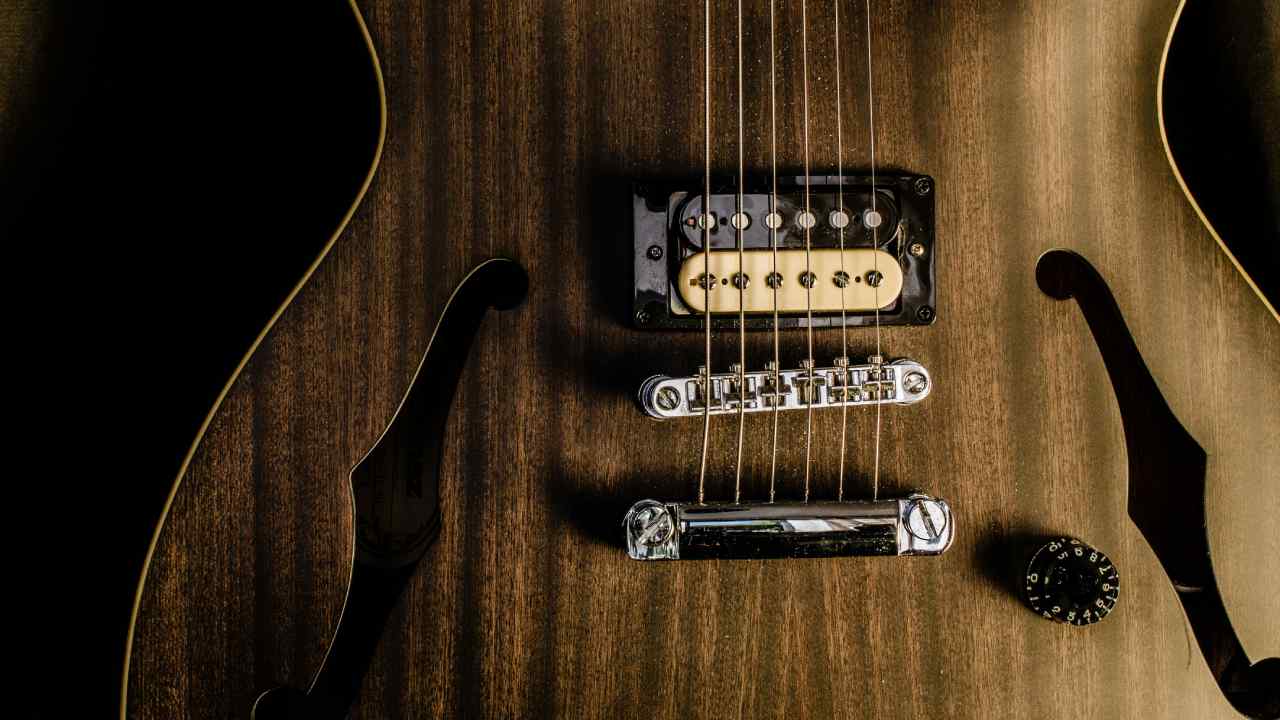
Too often overlooked and misunderstood, the concept of impedance is a fundamental element for any musician seeking to optimize the sound quality of their performances. This technical parameter directly influences the compatibility of musical instruments and ancillary devices such as amplifiers. Understanding the role of impedance helps any musician achieve the best possible sound and avoid compatibility problems between different electrical devices.
Impedance is an important physical concept to understand when you’re a musician. It applies to both musical instruments and ancillary devices like sound cards and amplifiers. Let’s try to simplify this term.
It is often confused with resistance, which is a measure of opposition to current flow with a constant voltage in an electronic circuit. Impedance considers more parameters, including the reactance of a circuit. According to dictionaries, it is the resistance of an electronic circuit to alternating current. Every circuit has impedance. Electric and amplified instruments are no exception. Impedance is measured in ohms (Ω) and denoted “Z”.
To illustrate this concept, imagine a pipe through which water flows. If the pipe bends, it restricts the water flow. The flow of water in the pipe slows down. This is what happens with impedance. The signal leaving the musical instrument is reduced and incomplete, because the receiving device cannot handle it.

A musical instrument has an output impedance related to the produced audio signal. A device that receives and transmits the audio signal has both input and output impedance. If the output impedance of the musical instrument is not adapted to the input impedance of the following device, the audio signal will be transformed. This results in a distorted, intermittent, or nasal sound.
Devices with high input impedance need less power from the signal source to power the circuit.
High output impedance must be properly managed by the subsequent device, otherwise voltage drops, distortion, or cuts may occur.
Take the example of an effects processor receiving a high-impedance signal from an electric guitar; it must be able to handle it to preserve the audio signal. If the instrument’s output impedance and the device’s input impedance are incompatible, the audio quality is diminished.
This is an excellent question, and you’re right to ask! The answer is: it depends! Each pickup produces its own impedance. Magnetic and piezoelectric pickups are available on the market with impedances ranging from low to very high. Generally, pickups are classified into three groups: low impedance, high impedance, and very high impedance.
Generally, piezo pickups are installed on acoustic guitars, bowed string instruments (violin, cello, viola, and double bass), and plucked string instruments like mandolins and banjos. A piezo is a component capable of generating electricity when subjected to mechanical stress. In the case of a musical instrument, a piezo produces an electrical signal when affected by vibrations generated by the strings.
Piezos are very high impedance transducers. It is often necessary to use a preamp or a “buffer” to control this impedance. If impedance is not properly managed, it can distort the sound signal. The role of the preamp, or any intermediate device, is to receive the high-impedance signal and convert it into a signal with an impedance suitable for an amplifier, PA system, or sound card, for example.

The majority of musicians playing an instrument equipped with a piezoelectric pickup use a preamp, a DI box, or an effects processor to control the output impedance of their instrument.
High impedance magnetic pickups equip electric guitars and basses. As these musical instruments represent the majority of electrical instruments, almost all devices are designed for these instruments. Therefore, they are suitable for their high impedance. Consequently, common musician’s devices (effects processors, effects pedals, amplifiers, DI boxes, wireless systems, etc.) are designed to function optimally with a high impedance.

Active magnetic pickups with low impedance exist on the market. The difference lies in the pickup’s production method. It’s often less expensive and simpler. The magnetic pickup has magnets and a coil of wire. Low-impedance magnetic pickups have fewer turns of magnetic wire, and the cable diameter is often smaller. This results in low resistance and therefore a lower volume output. However, they have the advantage of offering a wider frequency response and a particular timbre. This type of pickup generally comes with a 9V battery-powered preamp integrated into the guitar. The preamp increases the power, providing a consistent sound volume.
Some electro-acoustic guitars require a 9V battery to function. This means that the pickup used is an active piezoelectric pickup with low impedance. As with low-impedance magnetic pickups, these instruments are equipped with an integrated preamp. It is sometimes visible, sometimes not. Its purpose is to increase the volume and sometimes insert small effects. This is particularly the case for some electric violins and violas. They are equipped with a preamp micro, also adding a slight reverb or a touch of delay to improve signal quality. Musicians sometimes appreciate them, sometimes not at all!
In summary, there are two types of pickups (magnetic or piezoelectric) for three impedance types (low, high, or very high). Values are given for reference only, as they vary across all pickups.
| Pickup Type | Impedance | Reference Value |
|---|---|---|
| Magnetic | High (passive) | ≃ 1MΩ |
| Piezoelectric | Very High (passive) | > 1MΩ |
| Magnetic or Piezoelectric | Low (active) | < 500kΩ |
Impedance plays a role in the quality of the audio signal produced by the musical instrument and emitted by an amplifier. When you connect an electric guitar to an amplifier, the guitar’s output impedance must be compatible with the amplifier’s input impedance. If these two impedances do not match, this can result in a loss of audio signal quality. In this case, the signal emitted by the amplifier is tinged with distortion and/or a loss of volume. If the impedance difference is too large, there is even a risk of damaging a device. Impedance matching is a crucial step to achieve sufficient power and optimal performance.
To limit impedance-related problems, you need to check the input and output impedances of the devices. Each type of pickup produces its own output impedance. The device receiving the instrument’s audio signal must be able to handle its impedance. We know the impedance of musical instrument pickups. For devices, manufacturers list impedances in the user manual. It is sometimes also listed on the device itself. Some devices are even capable of adapting to impedance. This is particularly the case for many multi-effects processors that have a switch for very high, high, or low impedance pickups, or have an internal digital controller.
It is important to note that only the musical instrument and the following device in the signal path must have compatible impedances. The signal then proceeds with the output impedance of the device it passes through.
The market is flooded with hundreds of products! Products intended for use with electric guitars or basses support at least high impedance. Products intended for acoustic guitars are compatible with very high impedances. That’s why devices are distinguished by designations like “electric” or “acoustic.”
To choose compatible devices, you need to:
For electric guitar, bass, and acoustic guitar players, the choice is fairly simple. Just visit a music store or dedicated website to find a plethora of products. No guitarist will have trouble finding a preamp suitable for their guitar!
For all other instruments, the choice is much smaller. The market is much smaller, and so is the quantity of dedicated products. You must then absolutely verify the pickup impedance to choose a product adapted to the instrument’s frequencies and its impedance.
If the pickup has high impedance, you can consider all devices intended for electric guitars and basses. If the pickup has very high impedance, it’s best to use a device like a preamp after the instrument. In this case, look for acoustic guitar preamps.
Reminder: only the element that follows the instrument in the signal chain needs to be able to handle the instrument’s impedance. Devices that come afterwards benefit from the impedance of the very first device.
| Pickup Type | Category of Products |
|---|---|
| High Impedance | All products for guitars and basses |
| Very High Impedance | Primarily products for acoustic guitars. |
The answer is directly related to impedance. Each musical instrument has its own characteristics in terms of frequencies and impedance. Manufacturers strive to create amplifiers specifically tailored to the needs of each instrument. We therefore find guitar amps for electric guitars, so-called acoustic amps generally for acoustic guitars, bass amps, or synthesizer amps. The electric guitar uses a high-impedance pickup. Amps for this type of instrument are designed to handle this high impedance to deliver a high-quality audio signal.
A variable impedance amplifier has the ability to adapt to different signals. The user can adjust the impedance to that of different instruments and/or devices. This allows an amplifier to offer optimal sound performance for several musical instruments. There are variable impedance amplifiers, but also other devices. Multi-effects processors can be used by electric guitars, acoustic guitars, and synthesizers.
Microphones used with 3-pin XLR connectors are low impedance. They generally have an impedance between 1.2 and 5 kΩ.
The impedances between microphones and musical instruments are drastically different. This is why all mixing consoles have LINE and MIC inputs. If you connect a low-impedance microphone to a high-impedance input, you’ll get a weak audio signal.
Yes, but it’s not recommended! It is preferable to have at least one intermediate element to calibrate the signal (effects processor, preamp, DI box, etc.). Test connecting the guitar directly to the console with and without a preamp. Logically, you’ll hear a slight sonic difference between the two! It’s not for nothing that a sound engineer always places a DI box between their console and each instrument.
Understanding the role of impedance is essential to ensure a smooth connection between a musical instrument and the various devices in an audio chain. Mismatched impedance can affect sound quality and, in some cases, damage equipment. Whether you are a guitarist, violinist, or bassist, knowing the impedance of your instrument and your equipment allows you to fully enjoy the audio capabilities of your equipment.

