
Beautiful Plants For Your Interior
Beautiful Plants For Your Interior
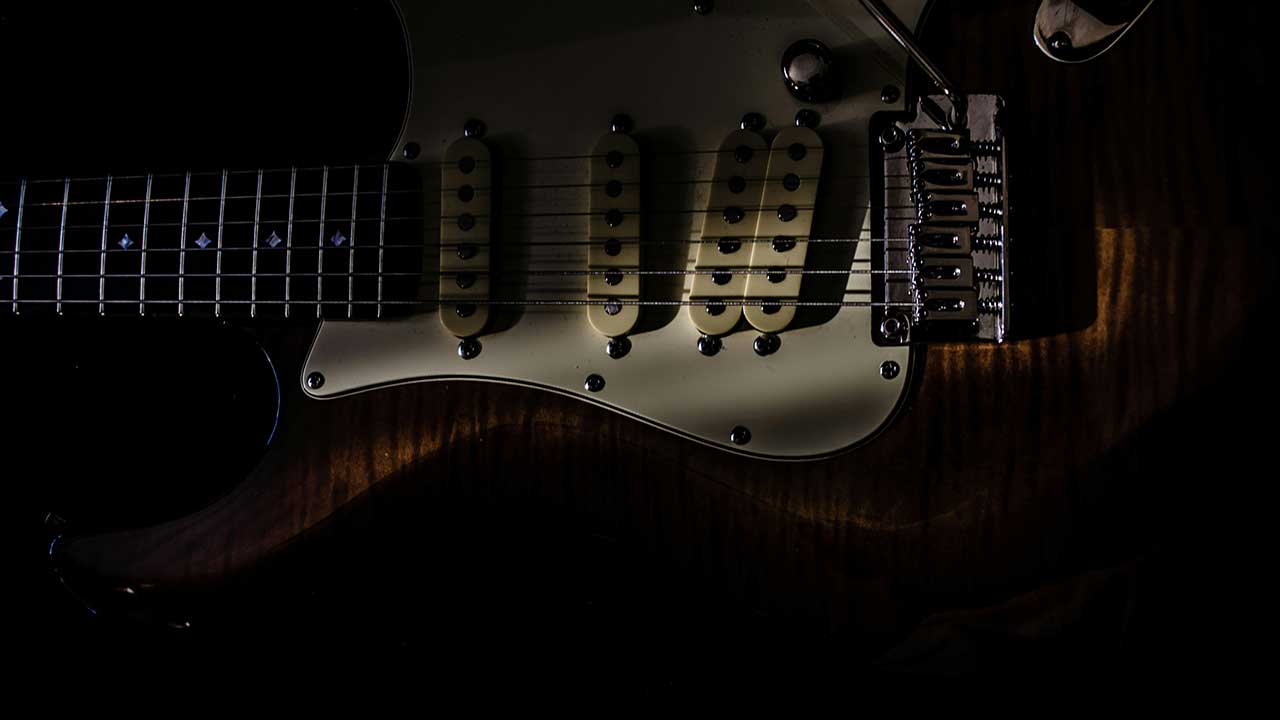
Pickups are essential devices for musical instruments. They convert string vibrations into electrical signals, playing a crucial role in sound amplification. Whether it’s an electric guitar, an acoustic violin, or a mandolin, the pickup is the ultimate solution for amplifying an instrument. To understand the benefits of pickups, it’s necessary to grasp their specifics, understand the technologies used, and recognize their distinctions.
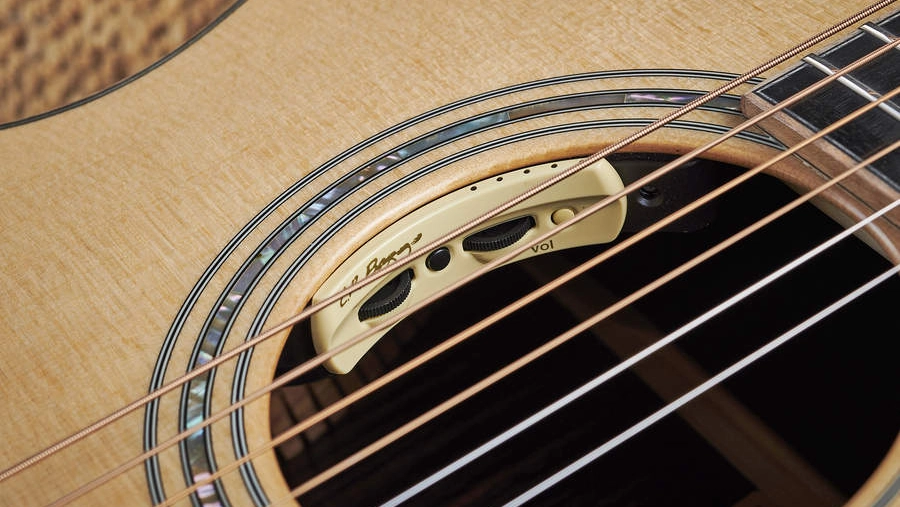
A pickup, also called a transducer, is a system that converts a physical signal into an electrical signal. In the case of musical instruments, it transforms the mechanical vibrations of the strings into an electrical signal sent to an amplifier. This final component transmits it using one or more speakers. Taking the electric guitar as an example, the pickup interprets the mechanical vibrations generated by plucking the strings, then transforms them into an electrical signal that is transmitted via the jack cable to the subsequent components. In the image below, an LR Baggs pickup designed for acoustic and classical guitars is installed in the sound cavity of the instrument.
Several pickup technologies exist. Magnetic and piezoelectric pickups are among them. Each has its own advantages and disadvantages. We will detail this further below.
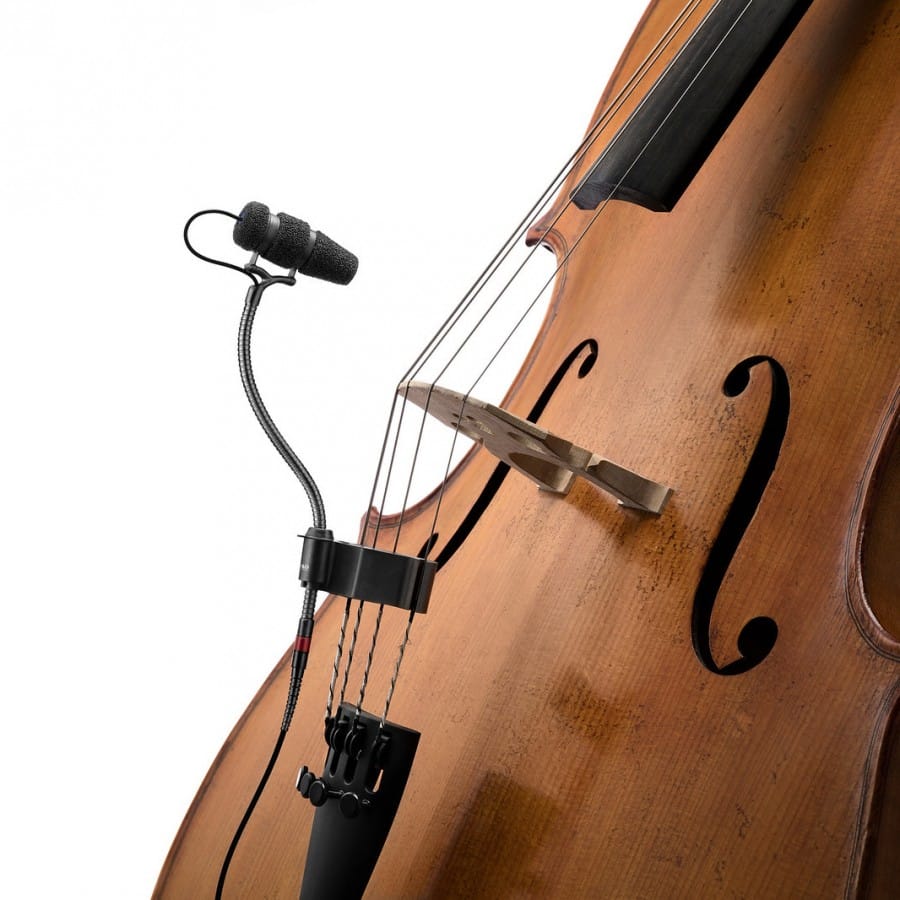
There’s the vocal microphone and the instrument microphone. For some instruments, you can find microphones that work like vocal microphones (see the picture belwo of a cello mic). But you can use too a pickup. The pickup represents another ‘microphone’ specifically used for musical instruments like the guitar. Logically, the term “microphone” should not be used, as a pickup is not a microphone. Distinguishing between a pickup and a microphone is essential to understanding the advantages and disadvantages of each system. Let’s discover the differences between these two devices together.
The sound sensing method between a pickup and a microphone differs significantly. A microphone uses changes in acoustic pressure, while a pickup uses mechanical vibrations. The types of sensing methods are different to produce the same signal.
The microphone captures sounds through vibrations traveling through the air, then converts them into an amplified electrical signal.
A pickup cannot interpret vibrations traveling through the air. It utilizes the mechanical vibrations generated by the instrument’s strings to produce the electrical signal.
This change in sound capture results in different characteristics of the captured sound. When traveling through the air, the sound produced by a microphone sounds more natural. Our ears are accustomed to hearing sounds traveling through the air, which gives that sense of a more natural sound. All sounds heard daily by our ears travel through the air.
A pickup captures mechanical vibrations. They don’t travel through the air, but through the instrument’s body. The generation process isn’t identical. This distinction leads to acoustic differences.
The microphone sound appears natural, while the pickup sound seems more direct and dry. This is why musicians add effects to the signal produced by a pickup. They enhance it to make it sound more natural using various effects like EQ, reverb, and delay.
The technical properties of a microphone and a pickup must also be considered. A microphone is designed to transcribe certain frequencies, and to ignore others. A microphone is manufactured with its intended use in mind. A microphone must be suited to the sound source it records. As each instrument has its own frequency range, each microphone is manufactured according to the instrument it’ll be used for.
Conversely, a pickup captures all frequencies and translates them into an electrical signal. Without electronic assistance, it cannot limit itself to a certain frequency range. It captures them all! With a pickup, you can have both good and bad frequencies.
A microphone may be limited to certain frequency bands, whereas a pickup captures and transcribes everything.
Pickups are essential for amplifying musical instruments. They are installed on all types of stringed instruments (guitar, mandolin, violin, double bass, etc.) to amplify them. Electric instruments lack a resonant body; they need a pickup to be heard.
Acoustic instruments have a resonant body capable of naturally amplifying the produced sound. However, the realities of large stages require musicians playing purely acoustic instruments to use pickups so their instruments can be heard by everyone. Without proper amplification, an acoustic instrument cannot compete with the percussion of a drum kit or the amplified bass.
Amplifying a musical instrument easily implies simple recording. It’s much easier to record an electric guitar than an acoustic cello without a pickup. We wrote an article about violin and bowed string instruments amplification.
It’s possible to amplify an instrument using a microphone. A microphone is not a pickup. Their sound capture methods differ significantly. A microphone is susceptible to feedback. Its use is often cumbersome on a large stage with multiple instruments and amplifiers. Pickups have the advantage of being less susceptible to feedback. This is one of their key strengths!
| Advantages | Disadvantages | |
|---|---|---|
| Microphone | “Natural” sound Captures only frequencies determined by the device | Amplification complexity Feedback |
| Pickup | No feedback Simplifies amplification | Direct and dry sound Captures all frequencies |
All electric instruments use pickups. The choice between a microphone and a pickup only applies to acoustic instruments like the violin, banjo, or cello.
A microphone is suitable for all musical instruments that don’t have a standard jack input to simplify amplification. However, using a microphone involves risks and limitations for use on large stages or within musical groups. Indeed, a microphone produces feedback if it is close to other sources. In the case of amplified concerts, the microphone is complex to use. The pickup is then more suitable, as it doesn’t produce feedback.
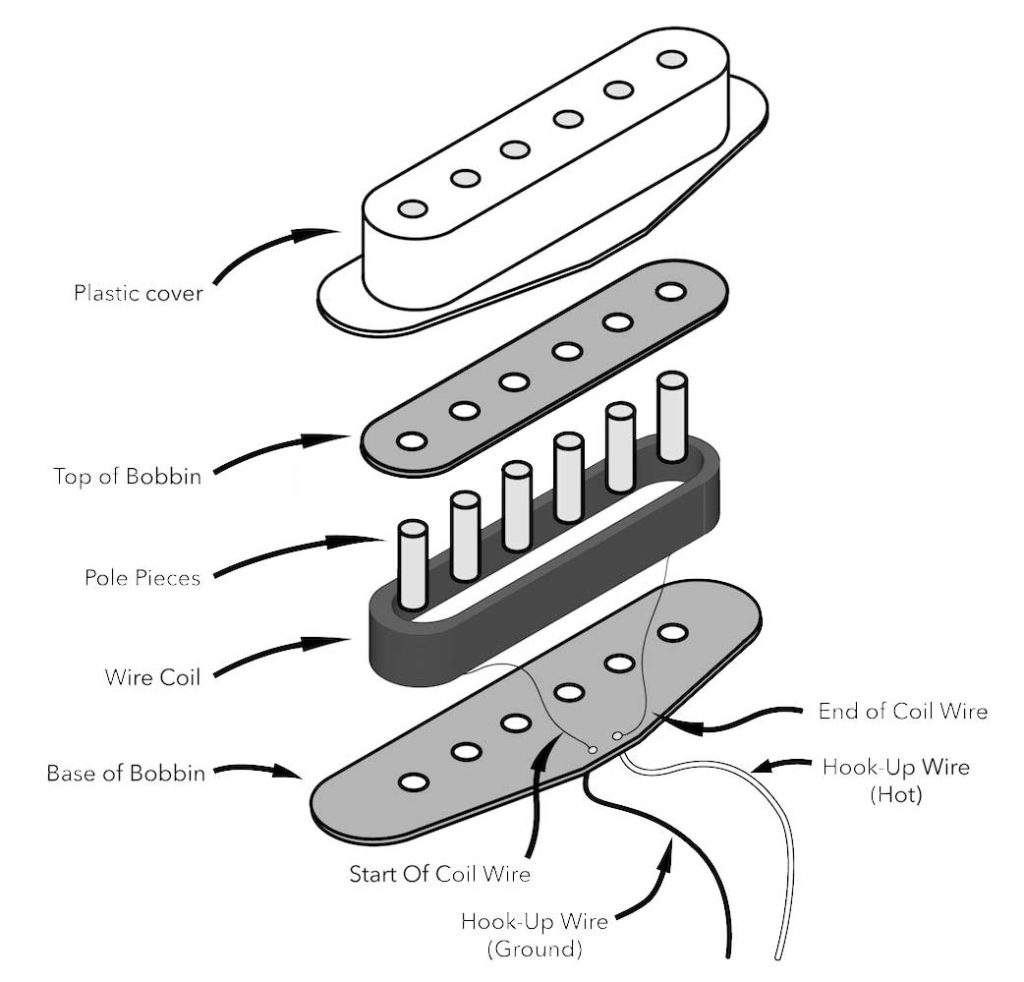
A magnetic pickup uses one or more magnets wrapped in a coil of copper wire. The magnet magnetizes the metal strings located above it. When a string is plucked, the string’s magnetic field is disturbed, changing, which induces an electric current in the pickup coil.
Electric guitars and basses use magnetic pickups. Most electric guitars have two magnetic pickups: one positioned at the bottom of the neck (called the neck pickup or neck) and the other near the bridge (called the bridge pickup or bridge). Some models use three magnetic pickups. The third is positioned between the first two. It’s called the middle pickup.
The position of each pickup on the guitar body affects the sound produced. Depending on its position, each pickup produces a different tone. They can be easily activated using the associated switches. Having multiple pickups on a guitar offers a broad sonic palette.
Within the diverse range of magnetic pickups, there are single-coil and humbucker pickups. A single-coil pickup consists of a single coil, while a humbucker pickup is typically composed of two coils. Humbucker pickups have two different appearances:
Magnetic pickups require the use of metal strings. They tend to pick up electromagnetic interference. This is the main problem with single-coil pickups. Humming is common and frequent. Humbuckers were designed to solve this. They consist of two coils of wire wound around magnets, placed in opposition to cancel out interference. Humbuckers do not pick up the noise and hum that single coil pickups do.
Single-coil pickups are perfect for country, blues, and alternative styles. Humbuckers are ideal for heavier musical styles like rock, hard rock, and metal.
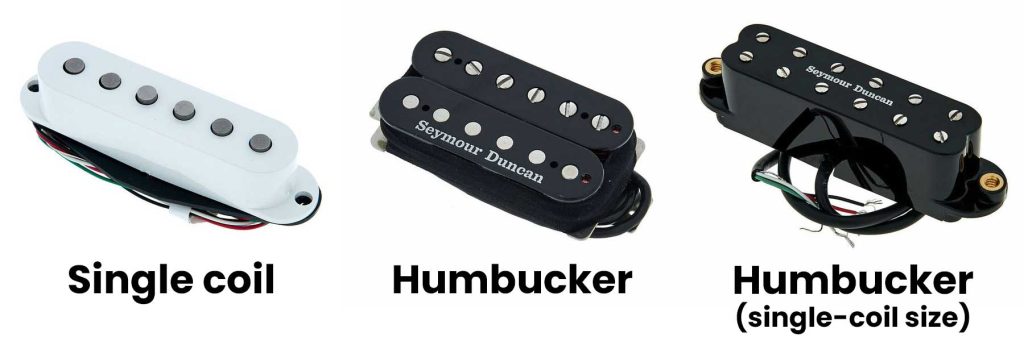
With their two coils of wire wound in opposing directions around multiple magnets, humbuckers create a stronger magnetic field. This leads to higher output levels, more prominent bass frequencies, and a reduced high-frequency response. Single-coil pickups offer a brighter and more precise sound than humbucker pickups.
| Pickup Type | Characteristics |
|---|---|
| Single-coil Pickup | Bright, clear, and detailed sound Susceptible to interference (hum) |
| Humbucker Pickup | Powerful, full, and smooth sound No interference |
A piezoelectric pickup uses one or more piezo elements. These are components that become electrically polarized when subjected to mechanical stress. In the case of musical instruments, they convert the mechanical vibrations produced by the strings into an electrical signal.
Piezoelectric pickups are very common. They equip most acoustic guitars, and bowed (violin, cello) and plucked (mandolin, banjo) stringed instruments. They are insensitive to magnetic fields and produce a high-impedance signal.
A piezoelectric pickup captures all produced frequencies: the good ones and the bad ones! This broad frequency spectrum results in high-amplitude signals, sometimes creating a distorted sound. That’s why many devices are designed for this technology. In the amplifier market, there are amplifiers designed for this type of signal. There are also numerous effects processors with a switch to control a regular or high-impedance signal. If you do not know what is impedance, please read our article.
An electric instrument or a pickup installed on an acoustic instrument cannot produce the natural sound produced by a resonant body. This is why many musicians are disappointed with the sound produced by pickups. They are not microphones and cannot capture the “airborne” sound.
To get closer to the natural sound of an acoustic instrument, two options are available:
A pickup can contain one or more transducers. Many acoustic guitars use a single piezoelectric “bar” pickup. It takes the form of a small rectangular bar placed under the guitar’s bridge. In this case, we have a single transducer pickup that captures vibrations as a whole and then transmits them.
Most electric guitars have a magnetic pickup with a transducer per string. The produced magnetic field is therefore relative to each string, which allows for a more precise signal. Using multiple sensors can separate the signal from each string. This is called a divided pickup or a polyphonic microphone. They are relatively rare, as they involve installing a potentiometer per string to control the power of each signal.
This is likely because your pickups are out of phase. Two pickups correctly connected in phase produce a rich and powerful sound, as their signals overlap. However, if they are out of phase, the signals cancel each other out, resulting in a shrill sound.
A pickup can be installed permanently or temporarily on an instrument. Permanent pickups are installed on electric guitars and other electric instruments. This type of pickup is integrated into the instrument itself, designed to accommodate it. Typically, on these instruments, the vibration capture system is invisible; it’s integrated into the bridge or positioned underneath it. The jack output is located in a specific spot and firmly attached to the instrument’s body.
A temporary pickup can be installed and removed after each recording. It attaches to the bridge or body using different systems (clamps, adhesive pads, etc.) or is attached to the instrument’s cavities. It also has a socket where you connect a jack cable. This type of pickup is very common for bowed stringed acoustic instruments like violins or double basses.
Before blaming the pickup, analyze your signal path to the amplification. The problem could be with the pickup, but also the amplification system. Here are some avenues to investigate:
You can also adjust your sound using an equalizer. An equalizer highlights or removes certain frequencies from the produced sound. It’s essential for musicians using piezoelectric pickups. Many pre-amps have built-in EQs.
Remember that the pickup’s role is to generate the signal; other devices must then process it.
Absolutely. The sound generated by the pickup varies depending on its position. This is why an electric guitar often has multiple pickups – each in a different position producing a different timbre.
This is also notably true for all temporary, detachable pickups. Every installation is unique. This is often invisible to the user, but even small differences in placement, string wear, or subtle manufacturing differences will impact the vibration capture and alter the resulting sound. Remember that classic instruments are typically not designed for electronic amplification; adjustments must be made for the pickup configuration to provide the desired effect.
It’s also important to understand that no two pickups will sound exactly alike. The resulting sound is influenced by hundreds of factors, changing considerably from one instrument to another and from one environment to another (materials, string type, shape, electronic components, etc.). In lutherie, it’s well understood that each wood type reacts differently to vibrations. For example, maple and spruce produce distinctly different timbres. Wood density, instrument shape, electronics, and many other factors all contribute to the guitar’s (or other instrument’s) final timbre.
The acronym RWRP stands for Reversed Wound / Reversed Polarity. It refers to single-coil pickups specifically designed for three-pickup configurations. To minimize interference, the polarity of the magnets and their winding are reversed to create the interference cancellation effect achieved by humbuckers.
Most microphones are passive. Using an active microphone involves installing a pre-amp in the musical instrument. Manufacturers generally try to avoid this. However, for certain instruments, it’s not uncommon to see active pickups. If your instrument requires batteries to function, it almost certainly uses a pre-amp, and therefore an active pickup.
An invaluable tool for musicians, the pickup is a technological advancement that has revolutionized modern music. It’s an essential tool for any musician seeking to amplify their instrument. There are many considerations in selecting a pickup, ensuring its characteristics meet the specific needs of both the instrument and the musician.

