
Beautiful Plants For Your Interior
Beautiful Plants For Your Interior
For decades, every sound or audiovisual recording has been assigned a unique code for identification and tracking throughout its lifecycle. In the audio field, this identity relies on a specific number: the ISRC. Designed to simplify rights management and track broadcasts, the ISRC ensures protection and facilitates the exploitation of works globally. How does the ISRC code actually work? Who can request one? And how to get one?
The ISRC number, or ISRC code, is an international identification code for musical recordings, whether sound (phonograms) or audiovisual (videomusicals). The abbreviation ISRC comes from the English International Standard Recording Code. It allows for the unambiguous authentication of a recording throughout its existence.
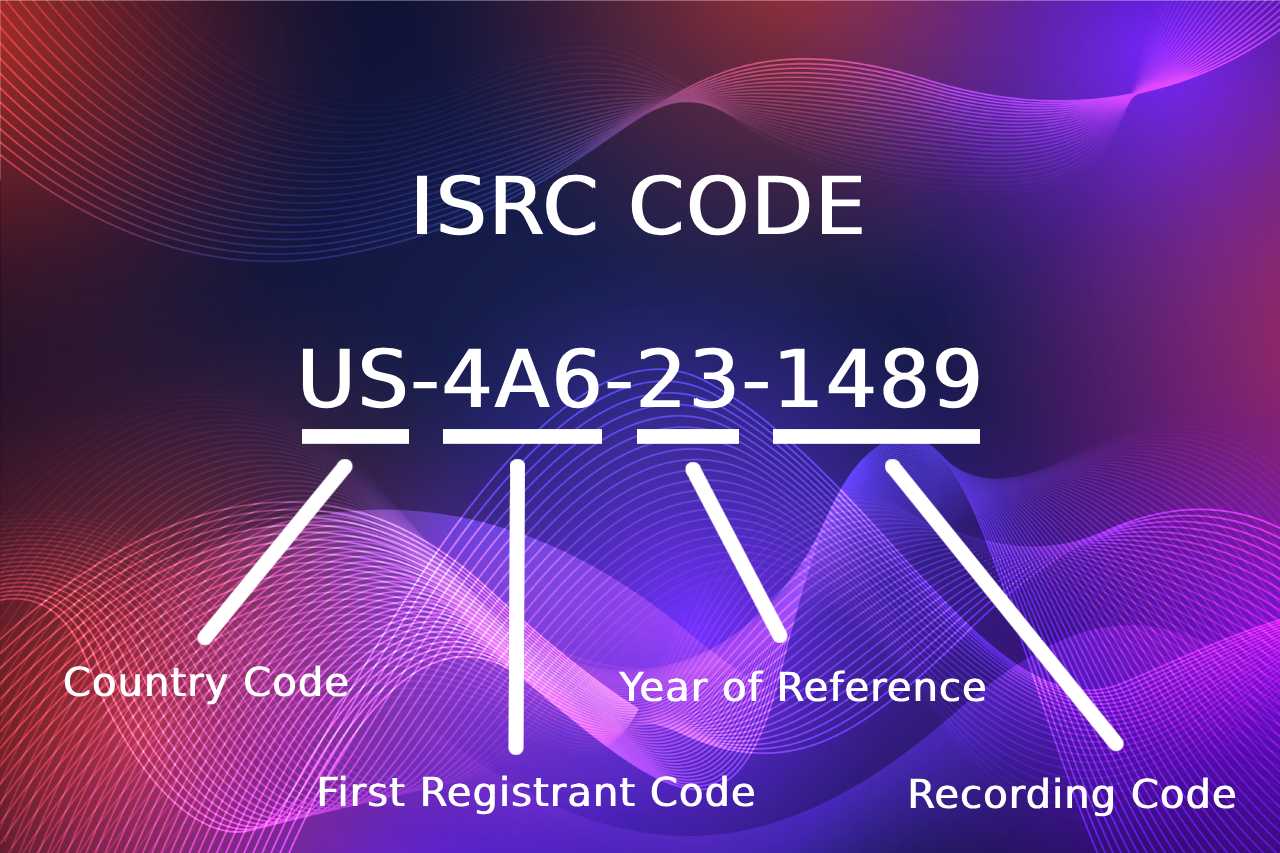
It consists of 12 alphanumeric characters breaking down the recording’s origins. It is divided into several identification zones:
Each zone of the ISRC code is separated by a hyphen. Thus, an ISRC number takes the form of: AA-X0X-23-00000. For example, an ISRC code assigned to a track deposited from the USA in 2023 could be: US-4A6-23-1489.

ISRC codes are assignable to phonograms (audio) and videomusicals (video).
Phonograms define any type of musical, spoken, and ambient audio recording. Ambient recordings characterize the recording of environmental sounds such as the sea or animals.
Videomusicals denote any type of video recording whose audio component represents a musical recording. This includes music videos, concerts, or any other musical performance.
ISRC numbers were created to simplify the calculation of broadcast performance and sales of a musical track globally. Before its existence, it was impossible to know the usage statistics of a track across multiple countries. Now, as soon as a track is broadcast on the radio, its ISRC number allows this broadcast to be counted. Broadcasting organizations (radio stations, streaming platforms, television stations, and other broadcasters) submit their recording broadcast metadata so that the copyright holders of the recordings can know their performance and earnings.
If your recording is complete and you intend to exploit it, an ISRC number must be requested. Exploitation can be financial or not. The ISRC number will facilitate the identification of your work. It must be requested to ensure broadcast tracking.
The ISRC code can be requested by the artist, the first producer of the track, or another entity with authorization granted by one of the first two.
An ISRC must be obtained through an authorized ISRC code assignment agency. Internationally, the ISRC is managed by the International Recording Authority. However, numerous organizations are authorized to distribute ISRCs. This is particularly true for many online music distribution platforms, such as TuneCore or DistroKid. In this case, upon submission of the recording(s), the digital distributor will obtain a specific ISRC code for each recording. You can then use them in various situations. Be aware that a digital distributor is a company submitting your tracks to major streaming platforms like Spotify and Apple Music. YouTube does not have this function! YouTube does not assign any ISRC numbers. However, if an ISRC code exists, YouTube uses it to track the track’s usage.
Another important point to know is that the assignment of ISRC codes by digital distributors allows them to perceive your neighboring rights.
The management of the rights of a work differs from one country to another. Copyright is primarily used in the United States. It protects the exploitation of a work for a set period. It does not protect the author of the work, but it defines a right of exploitation of it. The author sells the exploitation rights of his or her work in return for compensation to a company for a given period. Once this exploitation period is over, this entity no longer has the right to use the work. The author is then free to resell it to a new entity. People who have participated in the creation of the work (musicians, performers, etc.) have no special rights. They are paid at the time of recording. They tacitly cede all their rights.
This is drastically different in Europe, where musical works are protected by copyright and neighboring rights.
Copyright protects the creators of original works for up to 70 years after the author’s death, or the last living author when this right is shared by the collaborators of the same work.
Neighboring rights protect the added contribution during the creation of the title by a third-party entity or person. Thus, performers, musicians, producers, and other categories of people benefit from neighboring rights. To return to the previous paragraph, when the digital distributor intervenes in the ISRC code assignment, it positions itself as a third-party entity that has contributed something to the work. It will therefore benefit from neighboring rights.
In European Union countries, copyright protects the author of a work, and neighboring rights protect third parties who participated in the creation of the work. Whereas Copyright protects the exploitation of the work for a given period.
An ISRC number is assigned for life to a recording. Only a major change to the recording necessitates the request for a new ISRC code. These changes include a live recording, a remix, the addition of instrumental passages, a new version, etc.
A new ISRC code is not needed if:
A new ISRC code is needed if:
No, a recording already possessing an ISRC code and that has not undergone modifications, cannot obtain a new ISRC code. Even if usage rights evolve, the ISRC code does not change.
However, if these tracks don’t have any ISRC code, then yes, you can make an initial request. Find out from the original user about these tracks.
An ISRC assignment service for a requested recording generally requires:
It may be possible to obtain a temporary ISRC code if certain data is not yet definitive.
This is another identification code, meaning International Standard Musical Work Code. The ISWC identifies a work, while the ISRC identifies a recording of a work. The ISWC can be compared to the ISBN of books. It was created to simplify the management and distribution of copyright.
Essential to ensuring efficient rights management and precise broadcast tracking, the ISRC is an essential identification code for any audio recording. Whether for artists, producers, or distributors, it ensures the traceability of recordings while facilitating their commercial and artistic exploitation. Understanding the issues surrounding the assignment and use of the ISRC allows for a better understanding of the mechanisms that protect works and compensate creators.

