
Beautiful Plants For Your Interior
Beautiful Plants For Your Interior
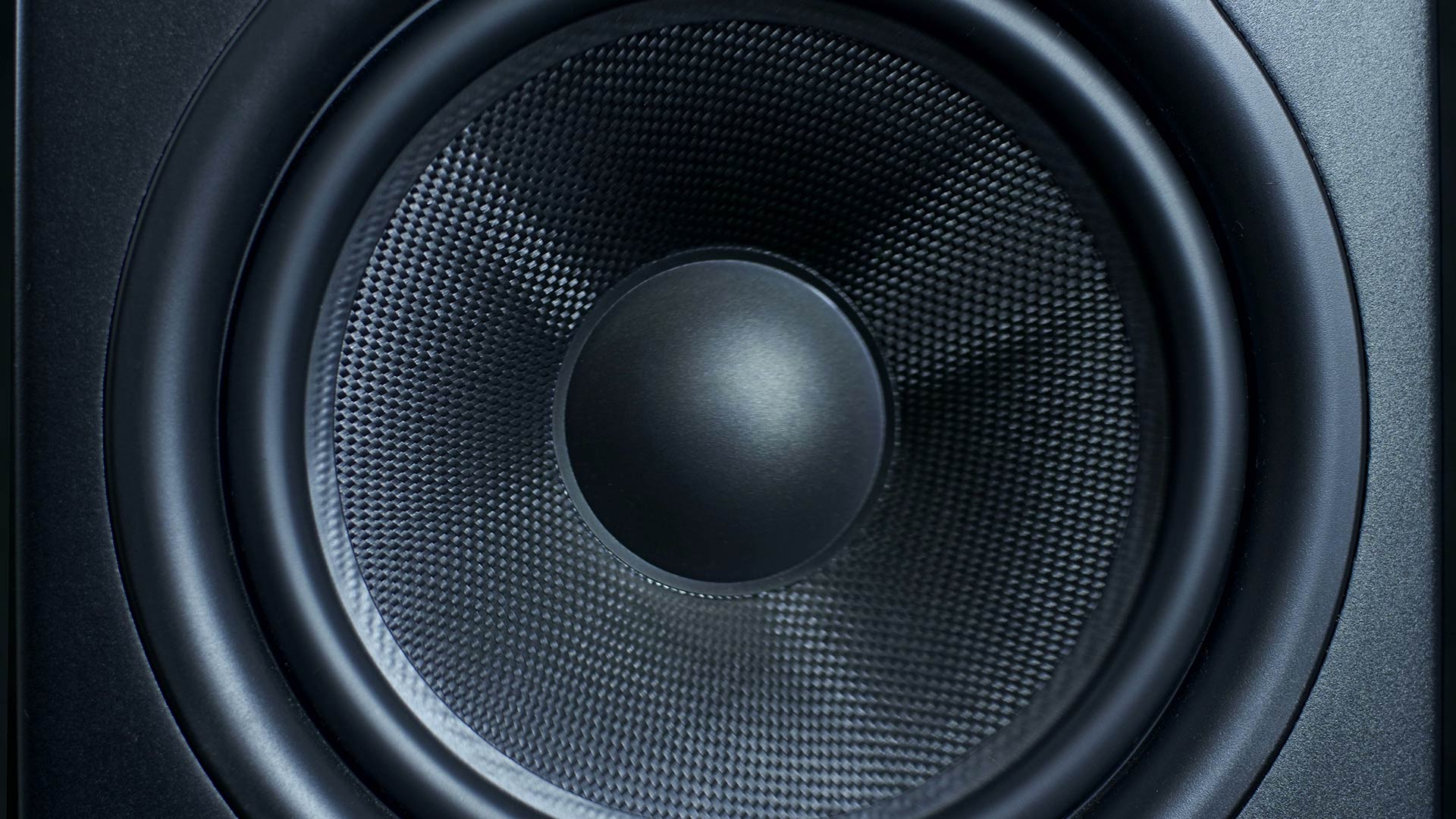
The speaker is a device omnipresent in our daily lives. From headphones to the speakers in our television, we use them every day. Do you know how these devices work, transforming an electrical audio signal into sound waves? Let’s discover their origins, the physical principles that govern their operation, their various types, and the criteria that determine their quality.
Devices related to amplification emerged in the late 19th and early 20th centuries. Inventors were working on telephony and radiophony, including American Lee De Forest, who developed wireless telegraphy devices (telephones). He filed the first patent titled “Device for Amplifying Weak Electrical Currents.” This led to the creation of the first electronic amplification tube: the Audion, by Lee De Forest in 1906. It contributed to the expansion of telephony and radio. The speaker transforms electrical signals into sounds audible to humans.
It was only in the 1920s that the three technologies necessary for radio broadcasting finally converged: microphones capable of converting voice into waves, speakers advanced enough to reproduce a range of audible frequencies, and transmitters with sufficient power for radio broadcasting. These advances in sound technology, particularly for microphones and speakers, stemmed from improvements to the phonograph. They also significantly contributed to the advent of sound cinema.
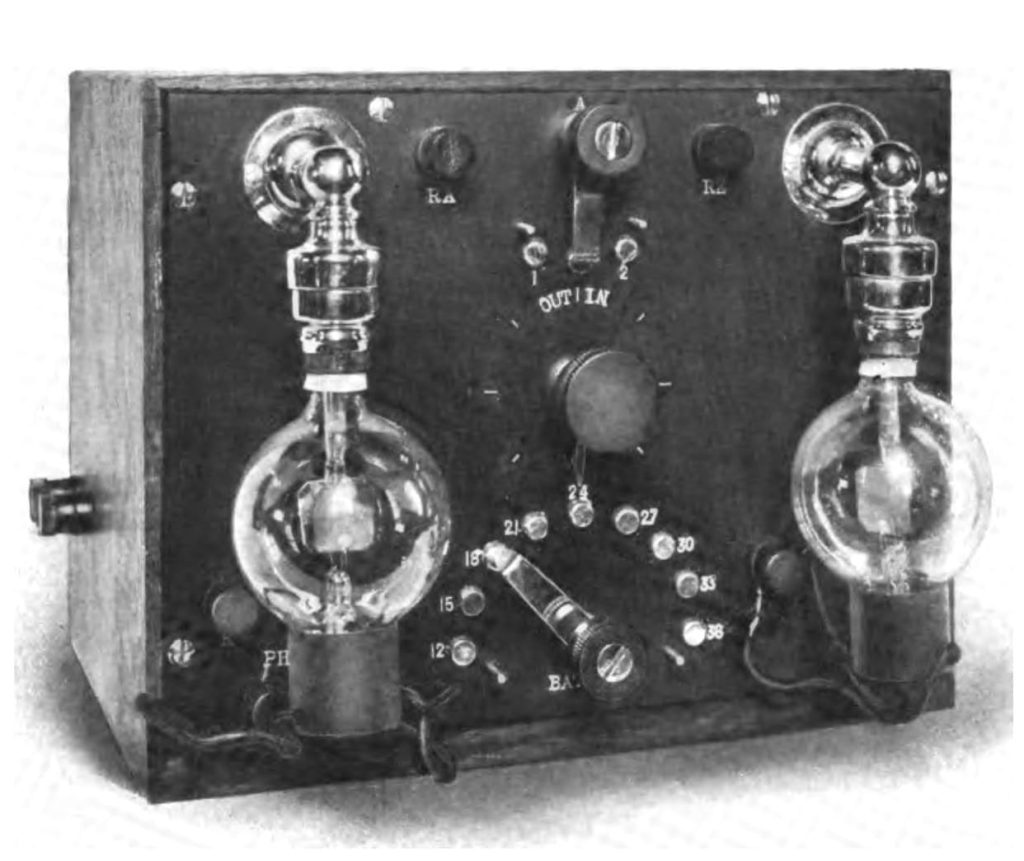
World War II facilitated the integration of speakers into radio receivers. They then entered the consumer market and became household staples. Decades later, Audion technology was replaced by transistor amplifiers, which were more energy-efficient and compact.
To become audible, an electrical audio signal must be transformed into mechanical sound waves that our ears can detect. The speaker is the essential tool that performs this conversion. It exists a fundamental link between the physical propagation of sound (a mechanical pressure wave) and the electromagnetic principle that allows a speaker to operate.
The foundation of sound reproduction relies on the speaker principle. Physically, sound is a mechanical wave that travels through the air as pressure waves. It propagates in a solid, liquid, or gaseous medium. Without a material medium, it cannot propagate. Unlike light, sound cannot travel through a vacuum.
To produce sound, two elements are always required: the vibrating object and a resonator. In the case of an acoustic guitar, the vibrating objects are the guitar strings, and the resonator is the soundboard. The strings vibrate when plucked, generating an initial sound. The vibration of the strings is transmitted to the guitar body, which amplifies the sound through the soundboard.
A speaker contains several essential components. It has a stationary part with a magnet and a moving part with a coil and a diaphragm. If you open a speaker, you will find:
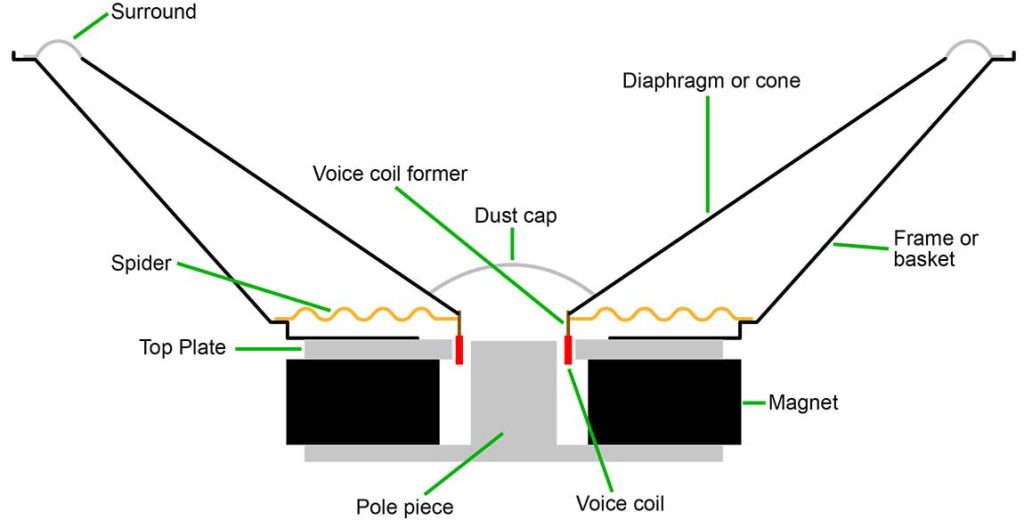
A speaker is a transducer: it receives an electrical signal produced by a microphone, for example, and converts it into sound waves emitted by the speaker. It transforms electrical energy into mechanical energy.
In summary, here’s the process:
The speaker operates on the principle of electromagnetism, converting an electrical signal into mechanical movement and then into sound waves.
There are three types of speakers that produce different sounds: woofers, tweeters, and midranges. On speaker systems, all three are installed on the same frame. The woofer is the large type of speaker responsible for bass. Tweeters are the smallest and generate high frequencies. Midranges sit between woofers and tweeters and cover the midrange audio spectrum.
A single speaker cannot provide good response across all frequencies. This is why multiple types of speakers are used based on frequencies. It’s also why soundbars have multiple speakers, each designated for a frequency range: bass, midrange, and treble.
In the music world, you often hear about active and passive speakers. The distinction is simple: active speakers have a built-in amplifier, while passive speakers require an external amplifier to produce sound waves.
The qualitative classification of speakers is based on fidelity tests. This refers to the range of sound emitted, measured in Hz. The classification compares the waveform in the air to the electronic signal sent to the speaker. The closer the comparison, the higher the speaker’s quality.
During this comparison, factors analyzed include frequency response, sensitivity, directivity, and distortion level.
A speaker’s frequency response is a key technical characteristic that measures its ability to faithfully reproduce different sound frequencies. It is expressed as a frequency range, for example, 45 Hz to 20 kHz, accompanied by an amplitude variation in decibels (e.g., ±3 dB).
This measure indicates which frequencies the speaker can reproduce and how accurately. An ideal frequency response is perfectly linear, meaning all frequencies are reproduced at the same sound level without coloration or distortion.
Frequency response analysis determines the sound reproduction quality of a speaker, evaluating its performance in bass, midrange, and treble. Audio professionals always seek speakers with a flat frequency response, ensuring all frequencies are present and none are overrepresented.
Another quality parameter is speaker sensitivity, which measures how efficiently a speaker converts electrical energy into sound. It is measured in decibels. The higher the sensitivity rating, the better the speaker can produce sound for a given power level. Measuring sensitivity allows comparison of speaker efficiency.
Directivity determines how the frequency response of a sound source changes depending on off-axis angles. It depends on the speaker’s diameter and the frequency it reproduces. Directivity describes how sound propagates directionally after being emitted by the speaker. It’s impossible to achieve constant directivity across all frequencies. Therefore, speakers are designed to suit specific applications.
In the case of speakers, distortion refers to any alteration between the input and output signals.
The speaker, far more than just an electronic component, is the result of remarkable technological evolution. Its construction involves technical complexities where each component plays a vital role in sound reproduction quality. Audio quality has become paramount for many users seeking perfect sound. Thus, understanding a speaker’s technical characteristics (frequency response, sensitivity, directivity, and distortion) is crucial for making informed investments in future speakers.
Sources: Wikipedia, Unsplash

